DOI:https://doi-0004.org/6812/17931196472859
Dr. Arama Feyrouz1, Pr. Dalile Samiha2
1University of Adrar Ahmed Draia, Specialisation: School Psychology, (Algeria), E-mail: aramafeyrouz@gmail.com
2University of Adrar Ahmed Draia, Specialisation: Orthophonetic psychology, (Algeria), E-mail: samihaortho@univ-adrar.edu.dz
Received: 20/03/2026; Accepted: 24/07/2026; Published: 06/10/2026
Abstract:
The Productive Family Programme for Algerian women forms part of the key pillars for achieving sustainable development and social justice. This is because enabling women, especially rural women, to access equal opportunities in the labour market and participate in entrepreneurship constitutes a fundamental pillar of a balanced and productive society. The programme has had a positive impact on the psychological and social aspects of the lives of these women, as it provides significant contributions to both society and the women themselves.
In the Algerian context, this issue has taken on a strategic character, supported by the Algerian state’s strong political will to improve the status of women in general, and rural women in particular. This is particularly evident in this programme, which is governed by digitalisation and complete transparency standards. The Productive Family Programme aims to empower families economically and socially in order to secure an income for them by engaging in productive activities. For example, the number of rural women beneficiaries of the various schemes in Adrar Province reached 1,800.
Furthermore, the Social Solidarity sector, through its central and local services and the Social Development Agency, provides tangible, multidimensional support in the form of accompaniment and awareness-raising, followed by guidance, training and qualifications, as well as directing women towards mechanisms for economic integration.
Keywords: Psychological effects, Social effects, Productive Families Program, Rural women.
Introduction
Rural women have become one of the most important issues in the country’s development. This can be seen on many occasions, perhaps most notably on the World Day of Rural Women. This important event recognises the achievements of rural women and the challenges they continue to face, which remain an obstacle to many rural women’s aspirations. These women are distinguished from urban women by the diverse activities they undertake, as they represent a significant proportion of the labour force in the agricultural, livestock and textile production sectors.
Rural development is a process that aims to develop various aspects of rural areas, improve their quality of life and provide economic support to people living in rural regions. This involves making use of agricultural land by developing natural resources to help meet the basic needs of rural populations. The aim is to build a rural society based on foundations that contribute to the growth of rural areas in several dimensions, such as education, healthcare, infrastructure and more.
Economic empowerment for women involves more than just providing financial opportunities; it also means equipping women with the necessary skills to make effective use of these opportunities. Basic skills strengthen women’s ability to adapt to economic changes, support their integration into the labour market and enable them to manage projects efficiently. Therefore, capacity building is central to the empowerment process.
In this research paper, we will present the Productive Family Programme to encourage a culture of work among rural women, particularly in remote or marginalised areas. Accordingly, we will seek to answer the following questions:
What is the Productive Family Programme?
What are its psychological and social effects on rural women?
What role does the Productive Family Programme play in achieving development by empowering rural women?
1. Rural development
Rural development is a set of integrated, dynamic processes that occur in rural societies through the combined efforts of locals and the government, using democratic approaches according to a specific social policy and realistic plan. The results of these processes are evident in a series of structural and functional changes affecting all components of rural social structure. These changes provide villagers with economic and technological initiatives, as well as social and public services such as education, healthcare, communication and transportation, electricity and social care. Some scholars also view rural development as a targeted social process aimed at addressing rural poverty, food insecurity and declining living standards among low-income groups in developing countries, as well as the increasing inequality and decline in services. (Ben Ferg, Ben Djaif, 2018: 367).
2. Means of Activating Rural Development
The process of developing rural society requires a set of essential elements and prerequisites, as identified by most theorists of rural development. Among these requirements are the following:
Decentralisation of planning for activities: This aligns with integrated rural development programmes based on local, popular participation. This process starts with setting priorities, identifying activities, planning, implementation and evaluation.
– Popular participation: Involving citizens because rural development depends on intensifying popular efforts at different levels. This enables beneficiaries to express their needs, protect their interests and increase their experience. Expanding the scope of participation also improves decision-making and encourages local communities to support and endorse these processes.
Building rural regions: within their geographic areas, after studying their problems and diverse characteristics, and according to the needs of society, while ensuring each region is given appropriate weight.
– Adopting an integrated approach: Rural development relies on integration and interconnection among all sectors, as well as economic, social and environmental fields. Each part is important to the others. These parts interact to form the whole, namely the village. This requires integration between government efforts (represented by local authorities) and popular efforts (represented by neighbourhood and village associations and local civil society organisations) to achieve rural development objectives.
– Raising the level of rural organisations: Rural development should be accessible to every farmer and agricultural landowner through easy loans, production inputs supported by modern technology and marketing programmes for their crops. This also involves creating an appropriate development environment and preparing all local conditions. This includes providing sufficient and continuous financing for rural development projects, offering material and moral support to young investors and rural women, combatting corruption and favouritism, fostering partnerships between the public and private sectors, and building contractual relationships among the different components of society. Emphasising the participation of individuals from rural society in all stages and processes of rural and village development is also required. (Fawzi, 2018: 116).
3. Definition of the Productive Family Programme
Based on Executive Decree No. 25-263 dated 9 September 2025, which sets out the conditions and procedures for benefiting from the Productive Family Programme, a productive family is defined as a family that meets its needs by undertaking activities based on the professional qualifications or skills of its members. These qualifications and skills must have been acquired and approved in accordance with applicable regulations, or acquired through training.
4. Conditions for benefiting from the Productive Family Programme
Under the aforementioned decree, productive families are granted financial assistance in the form of equipment and devices, or installations/equipment related to the activities practised, once only. This assistance ranges in value from 80,000 to 100,000 Algerian dinars.
The following categories may benefit from the Productive Family Programme without providing proof of income:
– A father or mother;
– A woman who is responsible for supporting her dependants or her siblings.
Activities associated with the programme include the following:
– cooking and baking, including various types of dough;
– Sewing, embroidery, wool spinning and weaving;
– Crafts related to pottery, porcelain, ceramics, glasswork, metals, straw products, wood and leather.
– Jewellery and ornament making and decorative arts.
Agricultural activities and the enhancement/valorisation of their products, particularly drying fruit, extracting natural oils and distillation.
– Animal husbandry and beekeeping.
To be eligible to benefit from the Productive Family Programme, the applicant must meet the following conditions:
– Have Algerian nationality;
– Be at least nineteen (19) years old (full years);
– Be resident in Algeria;
– Possess craft skills or professional qualifications that are acquired and duly approved, or resulting from training in accordance with the applicable regulations.
– Have no income, regardless of its nature.
– Not have benefited from any support programmes, assistance or equipment provided by the State.
– Be capable of carrying out the aforementioned productive activities.
– Commit to using the equipment, devices or installations for the activity in question.
Applicants are registered at the level of the Directorates of Social Activity and Solidarity of the province in which they reside, in a special register. A file must be submitted in exchange for a receipt.
5. Digital platform
To register for the Productive Family Programme, applicants access the Ministry of National Solidarity, Family and Women’s Issues’ website. The woman wishing to register types the term ‘Productive Family Programme’. She then registers under a specific name and enters her password/secret code. At this point, she can add any additional information.
If she is unable to do so, she can go to an internet café, contact neighbourhood cells (local units), or contact the Directorates of Social Activity and Solidarity in her province for assistance with her registration.
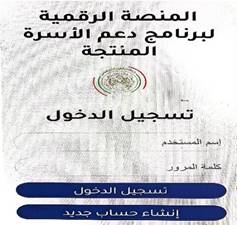
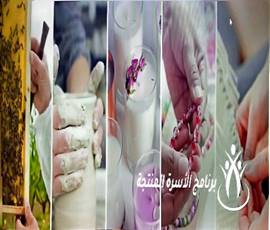
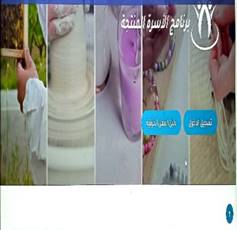
Moreover, accessing this page enables rural women to view a guide to innovative craft professions, including the following:
5.1 In the field of traditional industries:
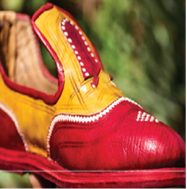
– Leather making
– Embroidery on leather
– Leather tanning
– Black pottery (black clay ware).
– Production of earthenware utensils
– Production of clay utensils
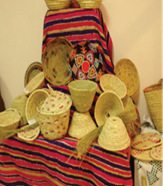
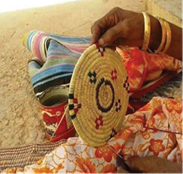
– Traditional utensil making from straw products (al-khuffan).
– Making traditional tents
5.2 In the field of jewellery and ornaments:
– Traditional and modern jewellery making
– Jewellery and stone engraving from non-precious metals
– Silverwork
5.3 In the field of embroidery and traditional and modern clothing:
– Sewing traditional garments
– Traditional weaving
– Production of straw items and burnouses (bernouz).
– Making bags of all sizes and types
– Electronic embroidery
5.4 In the fields of pottery, copper and artistic artefacts:
– Making wickerwork (sen sel/silaks).
– Making ‘dom’ (date palm baskets and associated products).
– Palm frond and wicker crafts made from date palm products
– Engraving and working with copper
– Pottery and ceramics
– Painting and designing on ceramic utensils and artistic artefacts
Production of artificial flowers and wedding decorations
Handmade decorations for various occasions.
– Making concrete artefacts
Macramé
– Sewing “skay” (leatherette/fabric material).
– Home decoration accessories
– Kitchen decoration accessories
– Making dried flowers
– Making sand-based artefacts
– Production of cork materials
5.5 In the field of beekeeping and natural honey:
– Beekeeping
– Converting natural honey into cosmetics
5.6 In the field of jam and natural foods:
– Preserving and drying vegetables and fruit.
– Making various fruit jams
– Extracting apple cider vinegar
– Making cheeses and milk derivatives
– Making chocolate from figs and carob.
5.7 In the field of traditional and modern confectionery:
– Designing pastries and cakes.
– Producing shapes for decorating sweets
5.8 In the field of traditional food:
– Making local couscous
– producing traditional pastries and doughs
5.9 In the field of extracting natural oils and medicinal herbs:
– Growing aromatic herbs for the home, such as thyme, mint and lavender.
– Preparing traditional perfumes from local flowers and herbs.
– Extracting vegetable oils using traditional and modern methods (e.g. argan oil).
– Preparing traditional cooking spices
5.10 In the field of soap and cosmetics:
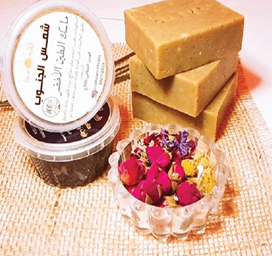
– Producing natural, traditional soap
– Producing scented, natural candles.
– Making natural cosmetic products, such as blue indigo dye, face and hair masks, and natural oils.
– Making prickly pear products (cactus pear).
5.11 Crafts in the field of the environment:
– Environmental recycling with upcycling, i.e. turning waste into new products
– Recycling and collecting plastic waste
– Breeding poultry and small animals
– Cultivating mushrooms
5.12 Various other crafts:
– Recycling fabrics and old clothes
– Women’s hair cutting (barbering).
– Upholstering car seats with textiles
– Henna art/design
– Photography of craft products (photographing and selling craft products online).
– Graphic design
– Electronic marketing
Printing by heat transfer and other crafts can be found in the traditional crafts guide issued by the Ministry of National Solidarity, the Family, and Women’s Issues.
After reviewing these crafts, citizens can register on the platform, which is mandatory to ensure transparency. This also enables citizens to see what procedures are followed to manage their file and what stage it is at. The following images illustrate the guide.
6. Psychological and social effects
A woman’s desire to move away from routine domestic work and seek more diverse employment, especially outside the home, provides her with ample opportunity to interact with others. This undoubtedly reduces her sense of fulfilment. Moreover, domestic tasks characterised by monotony and routine may be more satisfying if performed by two family members rather than one. Therefore, under prevailing conditions, women’s employment can benefit the family, particularly if the husband loses his job or his earnings decline for one reason or another.
A working woman is employed out of a desire to affirm her selfhood, realise her potential and contribute to societal development. In other words, she wants to play an active, positive role in life. As a result of her strong sense of self and her ability to take on different roles, she is more psychologically stable than a woman who doesn’t work. Her work helps her to overcome her fears and control them; it is a healthy, positive behaviour through which she can achieve her potential, thereby giving her a sense of security — something that non-working women lack. Through her drive to work, the working woman seeks to prove her competence to society and herself to carry out an effective, positive role that goes beyond the feminine role confined within the home. (Yahyaoui, 2017: 100).
The increased participation of women in the labour market has led to changes in the structure and function of the modern family. One of the most notable consequences of this change is women’s involvement in the family budget, which reduced the burden previously placed on the husband and gave her a greater say in family decisions. This has contributed significantly to her and her family achieving economic independence, helping them attain stability and cohesion. This was supported by husbands’ responsiveness in managing family affairs and childcare, meaning the relationship between spouses became based on mutual cooperation. This shift occurred after men had been the only people entitled to make decisions within the family and after their income had been the family’s sole source of income. Consequently, he was the “commanding and decision-making authority”.
A study by Blod and Hamlin demonstrated the effect of wives’ employment on changes in family authority and actual authority practices. The study found that working wives made and implemented more decisions than non-working wives. Thus, the material independence of the working woman enabled her to form her own opinions, participate in decision-making and secure her status within society. However, this remained a relatively limited matter since social values, customs and traditions continue to play an important role in shaping attitudes towards women’s work and other social phenomena. (Al-Dhahabi & Makkak, 2015: 185).
7. The Role of Community Cells within the ‘Productive Family’ Programme
7.1 What are community cells?
The ‘Community Cells for Solidarity’ programme is part of Algeria’s social policy, which aims to support vulnerable groups and develop remote and isolated regions. This is achieved by providing services to help these groups reach a decent standard of living that preserves their dignity. Since these cells are mobile units, they can reach citizens who face various difficulties, no matter where they are located. They approach citizens facing various difficulties, wherever they are located.
7.2 The tasks of community cells
7.2.1 Social assessments
– Identifying places and individuals who are poor, specifically rural women.
– Preparing municipal and provincial social maps and organising targeted focus groups.
7.2.2 Psychological support and guidance
– Providing accompaniment for those who wish to benefit from mineral or thermal water therapy.
– Offering medical and psychological support.
7.2.3 Mediation:
– Organising home visits.
– Facilitating family integration.
7.2.4 Medical care and distribution of social assistance:
– Contributing to the provision of in-kind allowances, especially clothing and food.
Contributing to the distribution of medical devices.
– Contributing to updating and approving files relating to applications for the lump-sum solidarity grant.
7.2.5 Raising awareness of entrepreneurship among rural and productive women
This is intended to contribute to local development through a participatory approach.
Activating various awareness campaigns related to social, health and development topics.
7.3 The Specialised Team within Community Cells
– A physician.
– A social worker.
– A psychologist.
– A social assistant.
– An agricultural or economic engineer, depending on the region in which the cell operates.
– A driver.
A table showing the field activities of the community cell teams.
| Awareness-raising about the Productive Family Programme | Medical care and distribution of social assistance | Mediation | Psychological support and guidance | Number of social investigations | Categories Year |
| 111 | 66 | 1123 | 461 | 1884 | 2026 |
8. Outcomes of Support Activities for Rural Women
We present these results based on the report submitted by the Directorate of Social Affairs and Solidarity of the Wilaya of Adrar regarding the implementation of the national programme. “Integrated”.
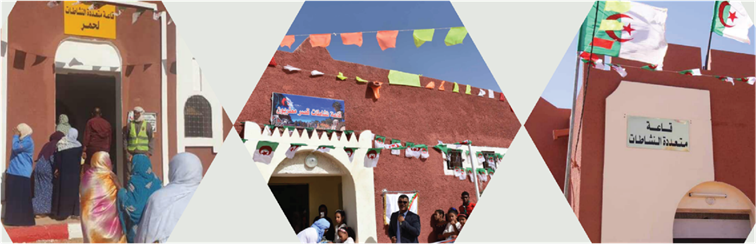
– Number of multi-purpose activity halls: 40
– Number of women beneficiaries: 11,000
Municipality of Adrar:

Municipalities:

Timi municipality:

Fenghouli municipality:

Boudah municipality:

– Tamentit municipality:

– Tamest municipality:

– Zawiya Kenta municipality:

– Inzegmire (Anzjemir) municipality:

– Sali municipality:

– Reguan municipality:

– Oulfa (Oulf) Municipality

– Timokton (Timqṭen) Municipality:

8.1 Measures of support and accompaniment for newly established multi-activity halls within the ‘Productive Woman’ programme
– Number of activity halls benefiting from sewing and weaving equipment: 11.
– Number of activity halls benefiting from the DEV COM social development programme: 1.
– Number of women who benefited from training: 319.
Sample of activity halls requiring reconditioning/reconfiguration:
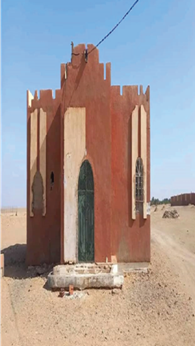
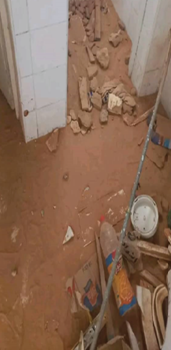

8.3 Table showing supported activities involving sewing and weaving equipment and raw materials.
| Number of women benefiting from training | Supported Activity Centres | Municipality |
| 43 | Ksar Ben Draou | Bouda |
| 25 35 21 | Ksar Ouled Sidi Ali Women Artisans’ Cooperative Ksar Boufadi | Tamantit |
| 40 40 | Ksar Al-Alouchia Ksar Al-Mansour | Fenoughil |
| 44 15 24 | Ksar Tamasakht Ksar Lahmar Ksar Aghil | Tamest |
| 30 22 | Ksar Matrioun Ksar Ain Belbal | Tamokten |
8.4 Support Programme for the Productive Family and the Homebound Woman
Number of women benefiting from sewing and weaving equipment and raw materials: 129
Number of women who benefited from training under the programme: 1,800
– Small Industry
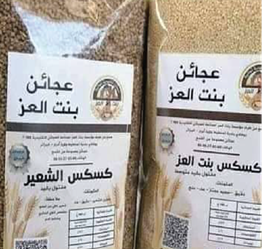
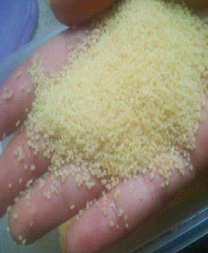
| Traditional handicrafts | Small-scale industry | Municipality |
| 44 | 30 | Adrar |
| 05 | 02 | Timimoun |
| 01 | 05 | Tsabit |
| 08 | 01 | Zaouiet Kounta |
| 00 | 01 | In Zghmir |
| 02 | 05 | Reggane |
| 11 | 26 | Aoulef |
| 06 | 62 | Timokten |
| 01 | 05 | Tit |
| 10 | 00 | Fenoughil |
| 04 | 00 | Boudah |
| 02 | 00 | Akabli |
| 02 | 00 | Sali |
| 05 | 00 | Tamest |
– Traditional Crafts
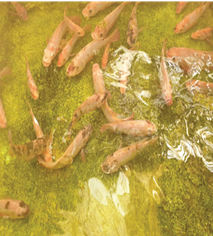
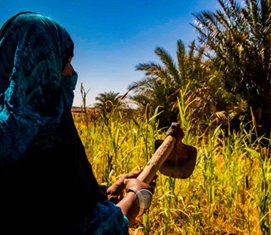
– Fishing, aquaculture and agriculture

8.5 Table showing the outcomes of activities for rural women
| Fishing and Aquaculture | Agriculture | Municipality |
| 04 | 02 | Adrar |
| 09 | 01 | Timimoun |
| 00 | 01 | Fenoughil |
| 00 | 06 | Sali |
| 00 | 02 | Reggane |
| 00 | 02 | Aoulef |
| 00 | 02 | Timokten |
| 01 | 00 | Bouda |
Conclusion
Based on the foregoing, rural women in the Wilaya of Adrar can be considered genuine partners in achieving local development, given their strong and active presence in various activities, especially agriculture, which is the main foundation for development in rural areas. However, they still face many obstacles that hinder their contribution to the development process, including a lack of necessary resources, illiteracy and other social issues.
On this basis, the Ministry of National Solidarity, the Family, and Women’s Issues has implemented a set of procedures and a digital platform through the ‘Productive Family’ initiative that ensures complete transparency for citizens in general and rural women in particular. The ministry has also worked through community cells to reach remote areas and raise awareness of the programme using various approaches and strategies. The aim is to improve the economic and social situation of rural women. Supporting them is essential if they are to contribute more effectively to managing local and national affairs and achieving development.
Accordingly, we find that development will not be achieved in any society unless all its members—men and women alike—aspire to it. Everyone must contribute to the development of their community with genuine motivation rooted in deep conviction so that all individuals are encouraged to engage in positive action, exerting clear and significant effort and capability to ensure the success of development in their community. Thus, rural women in Adrar understood the importance of their role in revitalising Algeria economically, politically, culturally and socially as one nation in the long term.
References:
- People’s Democratic Republic of Algeria. (15 September 2022). Executive Decree No. 25-263 of 9 September 2025 defining the conditions and procedures for benefiting from the Productive Family Programme (No. 61, Sixty-Second Year). No. 61, Sixty-Second Year.
- Ministry of National Solidarity, Family and Women’s Affairs, People’s Democratic Republic of Algeria. (July 2025). Guide to Innovative Craft Professions for Rural Women.
- El-Dhahabi, I. & Mekak, L. (2015). ‘Women’s employment and its impact on family stability’. Journal of Social Studies and Research, University of Echahid Hamma Lakhdar, El Oued, No. 11, pp. 175–188.
- Ben Faradj, Zouina & Ben Dhaif, Khalissa. (2018). ‘The economic empowerment of rural women as one of the successful mechanisms for stabilising the national economy: The experience of Bordj Bou Arréridj Province. Journal of Development and Applied Economics, University of M’sila, No. 3, pp. 364–373.
- Directorate of Social Action and Solidarity of Adrar Province. (June 2025). Report on Activities: Implementation of the Integrated National Programme.
- Yahiaoui, Safaa. (2017). ‘The Impact of Women’s Employment on Their Psychological Health and Family Relationships: A Field Study of a Sample of Married Female Teachers in Three Educational Levels in the Tlemcen District’. Doctoral Dissertation in Sciences, University of Oran 2.
- Fouzi, Abdelhak. (2018). The Role of Local Authorities in Rural Development: Challenges and ways of activation’. Journal of Development Research and Studies, Vol. 4, No. 2, pp. 110–129.