DOI:https://doi-0004.org/6812/17954591305152
Dr. Amroune Badra [1], Pr. Kharkhache Samya 2, Pr. Mimoune Nabila 3
Dr. Guendouz amina 4 , Pr. Ammiche samira 5 , Pr. Dilmi Fatiha 6
1 Université de Médée, Laboratoire de macroéconomie et de finance internationale (Algeria)
amroune.badra@univ-medea.dz ; http://orcid.org/0009-0005-8529-8153
2 Department of Commercial Sciences – Faculty of Economic, Commercial, and Management Sciences Mohamed Boudiaf University of M’Sila – Algeria. Laboratory: Laboratory for Entrepreneurship and the Digitalization Ecosystem for the Development of the Algerian Economy
samia.kharkhache@univ-msila.dz ; https://orcid.org/0009-0006-9976-153X
3 Department of Commercial Sciences – Faculty of Economic, Commercial, and Management Sciences Mohamed Boudiaf University of M’Sila ) Algeria(
nabila.mimoune@univ-msila.dz ; https://orcid.org/0009-0005-9513-7695
4 Université de Médée, Laboratoire de macroéconomie et de finance internationale (Algeria)
guendouz.amina@univ-medea.dz ; http://orcid.org/0009-0000-0074-7452
5 Professor in the Commercial Department , Faculty of Economic, Commercial and Management Sciences, University of M’sila (Algeria)
samira.ammiche@univ-msila.dz ; https://orcid.org/0009-0009-4017-9897
6 Professor in the Commercial Department , Faculty of Economic, Commercial and Management Sciences, University of M’sila (Algeria)
https://orcid.org/0009-0004-3143-7229 ; fatiha.dilmi@univ-msila.dz
Received : 23/05/2026 ; Accepted : 13/09/2026 ; Published : 23/11/2026
This study examines the relationships between information quality, live interaction, perceived authenticity, and repurchase intention in Algerian live commerce, with a particular focus on the indirect role of electronic trust. Drawing on the stimulus–organism–response (S-O-R) framework, the study analyzes survey data collected from 238 consumers with prior live-stream shopping experience in Algeria, using partial least squares structural equation modeling (PLS-SEM). The results indicate that all three quality cues are positively and significantly associated with electronic trust, with perceived authenticity exhibiting the strongest effect (β = 0.222). Electronic trust, in turn, is positively and significantly associated with repurchase intention (β = 0.473). Furthermore, all three specific indirect effects through electronic trust are positive and statistically significant, ranging from 0.059 to 0.105. The model explains 12.9% of the variance in electronic trust and 22.4% of the variance in repurchase intention. Since direct paths from the three quality cues to repurchase intention were not included in the estimated structural model, the findings demonstrate significant indirect relationships through electronic trust but do not establish whether its mediating role is full or partial. These findings provide context-specific insights into consumer behavior in Algerian live commerce, while highlighting the model’s limited explanatory power and the need for further research to strengthen its predictive assessment and robustness.
. Keywords : Live-streaming commerce; Information quality; Live interaction; Perceived authenticity; Electronic trust; Repurchase intention; Stimulus–organism–response (S-O-R) framework; Algeria..
JEL classification codes : M31; D91; O33.
Introduction
Live-streaming commerce is a retail format in which a seller or streamer demonstrates products, answers questions, reacts to viewers, and facilitates purchasing within a synchronized digital environment. Unlike a conventional product page, a live session is dynamic and socially visible. Consumers can request demonstrations, compare claims with what appears on screen, observe the presenter’s reactions, and read other viewers’ responses. These affordances can reduce psychological distance and uncertainty, but they can also intensify risk. Product descriptions may be incomplete, interaction may be selective or scripted, and apparent spontaneity may conceal commercial orchestration. The same features that create immediacy can therefore strengthen or erode trust.
Prior studies show that live-streaming changes consumer evaluation. Real-time affordances enhance engagement and purchase intention (Sun et al., 2019; Xu et al., 2020; Zhang et al., 2020); live demonstrations can reduce uncertainty (Lu and Chen, 2021); and relational communication can build trust (Wongkitrungrueng and Assarut, 2020). Nevertheless, purchase and repurchase intentions are not interchangeable. An initial purchase can be stimulated by novelty, scarcity, entertainment, or a temporary discount. A repeat purchase means that a consumer is willing to re-enter the relationship after evaluating a prior exchange. It is therefore a demanding test of whether the experience produced durable confidence rather than short-lived persuasion.
Live-commerce quality is multidimensional. A technically smooth stream is insufficient when claims are inaccurate. Rich information may be ineffective when viewers cannot obtain timely responses. Rapid interaction may fail when the streamer appears artificial or opportunistic. Context-specific work accordingly connects livestreaming service quality with trust and repurchase (Qin et al., 2025), while recent evidence emphasizes the importance of information quality (Shi et al., 2025). The present study examines three complementary cues: information quality addresses uncertainty about the offer, live interaction addresses uncertainty about communication and support, and perceived authenticity addresses uncertainty about the communicator’s motives.
The contribution of this study is contextual and model-specific rather than the introduction of a new theoretical mechanism. The S–O–R framework and trust-based explanations have already been applied in online and live-commerce research. The present study examines a particular configuration of three live-commerce quality cues—information quality, live interaction, and perceived authenticity—as antecedents of electronic trust, and considers repurchase intention as a post-purchase response in an Algerian sample. By examining the specific indirect associations through e-trust, the study provides evidence on how these quality cues are associated with consumers’ willingness to buy again. The findings should be interpreted as a context-specific test of an established framework, not as proof of a novel causal theory.
Electronic trust is proposed as the central mechanism. Trust permits consumers to accept vulnerability when they cannot fully monitor the seller, platform, or product. In e-commerce, it predicts favorable transaction intentions (McKnight et al., 2002; Gefen et al., 2003; Pavlou, 2003; Kim et al., 2008). In live commerce, it should translate observed quality into an expectation that future exchanges will be competent, honest, and dependable.
Prior research has already applied S–O–R and trust-based explanations to live-commerce purchase and continuance outcomes. For example, live-streaming research links affordances and interaction to purchase-related responses (Sun et al., 2019; Xu et al., 2020), while studies of live-commerce service quality and continuous purchase have examined trust and repurchase-related outcomes (Wu and Huang, 2023; Qin et al., 2025). The present study therefore does not claim to introduce a new S–O–R or trust mechanism. Its narrower contribution is to examine the joint configuration of information quality, live interaction, and perceived authenticity as antecedents of e-trust, with repurchase intention as a post-purchase outcome, in an Algerian sample. This is principally a contextual and configurational contribution; the cross-sectional design does not establish a new causal theory.
The study asks whether these three quality cues are associated with electronic trust, whether trust is associated with repurchase intention, and whether the corresponding specific indirect effects are statistically significant. The Algerian setting is relevant as a context in which payment availability, delivery reliability, reliance on cash on delivery, and digital readiness may condition online trust. These market-level conditions were not measured in the survey and are treated as contextual considerations rather than empirical findings. The analysis consequently evaluates the proposed associations without attributing them to any one structural feature of the local market
Accordingly, the present study seeks to answer the following research question:
Main Research Question :How do the dimensions of live-streaming commerce quality (information quality, live interaction, and perceived authenticity) influence consumers’ repurchase intention through the mediating role of e-trust within the Stimulus–Organism–Response (S–O–R) framework?
To address this research question, the following sub-research questions are proposed:
- Does information quality positively influence consumers’ e-trust in the live-streaming commerce environment?
- Does live interaction positively influence consumers’ e-trust in the live-streaming commerce environment?
- Does perceived authenticity positively influence consumers’ e-trust in the live-streaming commerce environment?
- Does e-trust positively influence consumers’ repurchase intention?
- Does e-trust mediate the relationships between information quality, live interaction, perceived authenticity, and consumers’ repurchase intention?
1. Literature Review
- Live-commerce quality
The information-systems success tradition identifies information and service quality as drivers of user evaluations (DeLone and McLean, 2003). Live commerce extends this logic because the service is simultaneously a transaction system and a social performance. Quality is experienced through what is said, how the seller responds, and whether the presentation seems genuine. This study defines live-commerce quality as the consumer’s assessment of the excellence of informational content, real-time relational exchange, and authentic product presentation.
Information quality is the extent to which product and transaction information is accurate, relevant, complete, timely, understandable, and useful. It helps consumers compare alternatives and anticipate purchase consequences (DeLone and McLean, 2003).
Live interaction is the extent to which communication is reciprocal, responsive, and tailored in real time. It creates access to the seller and an opportunity to resolve ambiguity. Perceived authenticity is the extent to which the streamer and presentation appear genuine, transparent, consistent, and not deceptively staged. It is an inference based on verbal, visual, and behavioral cues (Sun et al., 2019; Wongkitrungrueng & Assarut, 2020) .
The dimensions are related but not redundant. Information can be detailed when the presenter is unresponsive. Interaction can be rapid when claims are weak. A presenter can appear sincere while lacking adequate knowledge. Estimating them separately reveals which cues contribute distinct explanatory value.
- Electronic trust
Trust matters under uncertainty, interdependence, and vulnerability. Consumers cannot completely verify product quality, seller motives, fulfillment, privacy protection, or after-sales support before an online transaction. Electronic trust is defined here as a confident belief that the live-commerce seller and associated channel are competent, honest, benevolent, and reliable enough to fulfill their obligations. These dimensions are consistent with established online-trust measures (McKnight et al., 2002).
Trust differs from satisfaction and from the absence of risk. Satisfaction evaluates prior performance against expectations, whereas trust is willingness to rely on an exchange partner under uncertainty. Risk may remain even when trust is high. Trust makes that uncertainty tolerable and supports commitment (Pavlou, 2003; Kim et al., 2008).
Live commerce provides rich trust cues. Continuous video may show details that static photographs conceal. Immediate answers can signal competence and accountability. Consistent communication and willingness to acknowledge limitations may indicate integrity. Conversely, fabricated scarcity, filters, undisclosed sponsorship, and selective responses can undermine confidence.
- Repurchase intention
is a consumer’s conscious likelihood or plan to buy again from the same livecommerce seller, channel, or platform. It is a post-adoption outcome informed by experience rather than only pre-use beliefs (Oliver, 1980; Bhattacherjee, 2001). Repeat patronage is economically important because customer acquisition and influencer exposure are costly, whereas returning customers can generate stable revenue and favorable word of mouth. Intention is not actual behavior, so future studies should connect survey responses with transaction records.
1.4 Integrated theoretical lens
The stimulus–organism–response (S–O–R) framework proposes that environmental cues affect an individual’s internal cognitive or affective state, which then shapes an approach or avoidance response. In the present study, information quality, live interaction, and perceived authenticity constitute the stimulus component because they are observable features of the live-commerce environment. Electronic trust constitutes the organism component because it represents the shopper’s internal judgment that the seller and channel are competent, honest, and dependable. Repurchase intention constitutes the response component because it expresses the shopper’s intended approach behavior toward a future transaction. This specification makes trust the explanatory bridge rather than treating live-commerce features as automatically producing repeat purchasing. Uncertainty reduction explains the first stage of the sequence: accurate information reduces uncertainty about product attributes and transaction terms, responsive interaction enables clarification, and authentic presentation reduces uncertainty about the seller’s motives. The second stage follows when greater trust makes the consumer more willing to accept vulnerability in another exchange. Live demonstrations and communication can thus reduce uncertainty, cultivate trust, and ultimately encourage continued purchasing (Lu and Chen, 2021; Wongkitrungrueng and Assarut, 2020; Wang et al., 2022).
Table.1. Application of the S–O–R framework to the study
| S–O–R stage | Study constructs | Theoretical function | Hypotheses | |
| Stimulus (S) | Information quality, live interaction, and perceived authenticity | Environmental quality cues that provide diagnostic product information, access to responsive communication, and evidence about the presenter’s sincerity. | H1–H3 | |
| Organism (O) | Electronic trust | The consumer’s internal evaluation of competence, honesty, benevolence, and reliability under conditions of uncertainty. | H1- H4 | |
| Response (R) | Repurchase intention | An approach-oriented behavioral intention to purchase again from the live-commerce seller, channel, or platform | H4 | |
| Indirect S–O–R mechanism | IQ/LI/PA → ET → RI | The stimuli influence the response insofar as they are interpreted as reasons to trust the future exchange. | H5–H6 | |
Source: Developed by the authors based onMehrabian and Russell (1974), Eroglu et al. (2001), and Wongkitrungrueng and Assarut (2020).
- Hypothesis Development
2.1 Information quality and trust
Consumers cannot physically inspect most products during a stream. They depend on descriptions, specifications, demonstrations, prices, warranties, delivery terms, and answers to questions. Accurate and complete information helps them predict product performance and signals seller competence. Disclosure of material limitations can also indicate integrity. Exaggerated benefits, missing conditions, and inconsistencies instead increase suspicion. Recent live-commerce evidence shows that information quality fosters trust and purchase-related intention (Shi et al, 2025). Therefore:
H1. Information quality has a positive effect on electronic trust in live commerce.
2.2 Live interaction and trust
Real-time interaction differentiates live commerce from asynchronous pages. Viewers may request another product angle, comparison, or clarification of delivery and return terms. A relevant response provides evidence that the seller is attentive and capable. Computer-mediated interaction can facilitate swift relational bonds (Ou et al, 2014), while live affordances make responsiveness publicly visible (Sun et al., 2019; Xu et al., 2020). Responsiveness functions as service and accountability: consumers who observe consistent answers may expect future concerns to be handled responsibly.
H2. Live interaction has a positive effect on electronic trust in live commerce.
2.3 Perceived authenticity and trust
Consumers know that streamers may be paid, urgency appeals may be planned, and demonstrations may be selective. Authenticity helps viewers judge whether enthusiasm and claims are sincere. Natural communication, disclosure, consistency, and acknowledgment of limitations can indicate integrity and benevolence. Authenticity is thus a governance cue where formal verification is limited.
H3. Perceived authenticity has a positive effect on electronic trust in live commerce
2.4 Trust and repurchase intention
Repurchase requires consumers to accept vulnerability again. Products may not match demonstrations, sellers may fail to honor promises, and platforms may not resolve disputes. Trust makes the future exchange more predictable and reduces search and evaluation costs. Online research consistently links trust with transaction intention (Gefen et al., 2003; Pavlou, 2003; Kim et al., 2008), and live-commerce studies connect trust with continued purchase (Wu and Huang, 2023) ; Qin
H4. Electronic trust has a positive effect on repurchase intention in live commerce.
2.5 Trust as a mediator
Information quality may be associated with repurchase intention insofar as consumers interpret it as evidence that the exchange partner deserves reliance. This study tests the specific indirect association through trust; because the corresponding direct path was not estimated, it does not assess whether that indirect effect is full or partial mediation.
H5. Information quality has a positive specific indirect association with repurchase intention through electronic trust. Interaction and authenticity also require psychological interpretation. Rapid communication may be entertaining without supporting repeat patronage unless it signals dependable service. Authenticity may support confidence in integrity. The model therefore tests the specific indirect associations of these cues with repurchase intention through trust.
H6a. Live interaction has a positive specific indirect association with repurchase intention through electronic trust.
H6b. Perceived authenticity has a positive specific indirect association with repurchase intention through electronic trust.
2.6 Conceptual Model
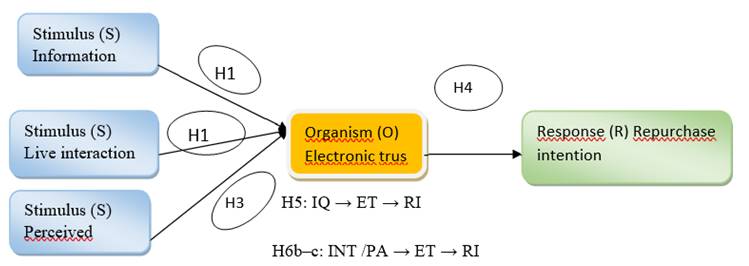
Figure 1: The proposed S–O–R quality–trust–repurchase model.
- Methodology
3.1 Design and sampling
The study employed a quantitative, cross-sectional survey targeting consumers residing in Algeria who had previously purchased products through a live-streaming commerce session. Data were collected in May 2025, and respondents were recruited through social-media channels using a non-probability sampling procedure. Participation was voluntary, and the survey was conducted anonymously. The inclusion criterion was prior experience with at least one purchase through a live-streaming shopping session.
The initial dataset contained 242 records. Following data screening, four incomplete records containing system-missing values in demographic and live-commerce usage variables were excluded from the dataset, resulting in a final analytical sample of 238 valid respondents (98.35% of the initial records). All 238 respondents reported having previously purchased products through live-streaming commerce. No missing values remained in the final analytical dataset. However, the exact number of individuals who received or started the questionnaire was not documented. Therefore, the response rate could not be calculated. The specific reasons for the four incomplete records were also not documented.
The available descriptive records further indicate that respondents were concentrated in the regions of M’Sila and Médéa. Consequently, the sample should not be considered statistically representative of all Algerian consumers, and the findings should be generalized with caution to consumers with characteristics similar to those represented in the sample.
A retrospective sensitivity analysis was conducted for the electronic-trust regression equation using N = 238, three predictors, α = .05, and a target statistical power of .80. The reported minimum detectable overall effect was f² = .047 (approximately R² = .045). This analysis represents a sensitivity assessment under the assumptions of a fixed-model multiple regression. It should not be interpreted as an a priori sample-size justification, nor does it establish adequate statistical power for every individual path or specific indirect effect.
- Questionnaire development and measurement
The study employed a structured questionnaire consisting of multi-item measures adapted from previously published studies. Five constructs were included in the research model: information quality (IQ), live interaction (LI), perceived authenticity (PA), electronic trust (ET), and repurchase intention (RI). All constructs were specified as reflective and measured using multiple indicators adapted from established scales in the literature. The construct definitions, illustrative measurement items, and corresponding theoretical sources are presented in Table )2(.
Information quality refers to the accuracy, relevance, completeness, clarity, and timeliness of product-related information provided during live-streaming sessions. Live interaction captures the responsiveness and reciprocal communication between the broadcaster and viewers, including the exchange of questions, comments, and opinions. Perceived authenticity concerns the extent to which the broadcaster’s presentation and product-related claims are perceived as genuine, honest, transparent, and realistic. Electronic trust reflects consumers’ confidence in the reliability, honesty, and security of the live-commerce shopping environment. Repurchase intention refers to consumers’ stated willingness and likelihood of purchasing products again through live-commerce channels.
The measurement items were adapted from previous studies, as indicated in Table 2. The questionnaire items were designed to capture respondents’ perceptions and behavioral intentions based on their previous live-stream shopping experiences. The final measurement specifications were considered in relation to the conceptual definitions of the five constructs.
Particular attention was given to the conceptual consistency of the measurement items. Specifically, the electronic trust indicators cover different aspects of trust, including information reliability, purchasing safety, seller commitment, personal data protection, and payment security. Similarly, the repurchase intention indicators include statements concerning future purchases, continued use, shopping preferences, and recommendations to others. These items should therefore be assessed carefully to ensure that they adequately reflect their respective theoretical constructs and that the reflective measurement specification is supported by the measurement-model assessment.
Table 2: Construct definitions and illustrative items
| Construct | Illustrative items | Foundations |
| Information quality (IQ) | The live stream provides accurate information about the products being showcased | (DeLone and McLean , 2003); (Shi et al, 2025) |
| The information provided during the live stream is complete and sufficient for making a purchase decision. Product information is continuously updated during the live stream | ||
| The features and benefits of the products are clearly explained during the live stream. | ||
| The live stream provides accurate information about the products being showcased | ||
| The information provided helps in comparing different products. | ||
| I consider the information provided during the live stream to be reliable and trustworthy. | ||
| Live interaction (LI( | I can easily communicate with the broadcaster during the live stream. | (Sun et al, 2019);. (Ou et al, 2014) |
| My questions are answered quickly during the live broadcast. | ||
| feel the broadcaster interacts effectively with viewer comments. | ||
| Live streaming allows for communication and the exchange of opinions between users. | ||
| The live interaction increases my interest in watching the broadcast. | ||
| The interaction during the broadcast makes me feel involved in the shopping experience. | ||
| Perceived authenticity (PA) | I feel the presenter showcases the products in an honest and realistic way. | |
| The live stream reflects the true characteristics of the product without exaggeration | (Wongkitrungrueng and Assarut , 2020) | |
| I feel the presenter shares their personal experiences sincerely | ||
| The presenter presents the advantages and disadvantages of the product in a balanced manner. | ||
| The presenter presents the advantages and disadvantages of the product in a balanced manner. | ||
| Electronic trust (ET) | I trust the information provided during live streams. | |
| . I feel safe purchasing products through live commerce. | (McKnight et al, 2002).; (Gefen et al, 2003). | |
| I trust that the seller will honor their promises made during the live stream. | ||
| I believe my personal data is protected when purchasing through live commerce. | ||
| I trust the security of online payment processes during purchases. | ||
| I feel that live commerce provides a reliable shopping environment. | ||
| Repurchase intention (RI) | I intend to purchase products again through Live Commerce in the future. | (Bhattacherjee, 2001); (Qin et al, 2025). |
| I will continue to use Live Commerce when I need to buy similar products | ||
| I prefer repurchasing through Live Commerce compared to other shopping methods. | ||
| will recommend Live Commerce to others for their purchases. I will make Live Commerce one of my primary options when shopping online | ||
| If my experience is positive, I will repeat my purchase through Live Commerce. | ||
| . |
Source: Authors’ compilation based on the reviewed literature
4 Data analysis and measurement assessment
All five constructs were modeled reflectively in SmartPLS. The supplied results identify the retained item codes but do not include the complete questionnaire, response anchors, survey language, translation procedure, pretest or pilot details, or evidence of content-validity review. These omissions prevent independent assessment of item wording and construct coverage. The e-trust items reportedly span information trust, seller promises, privacy, payment security, and channel reliability; the repurchase-intention scale also contains recommendation and conditional wording. These item domains may not be unidimensional, and their content validity should be verified against the original questionnaire before interpreting the reflective estimates.
4.1 PLS-SEM procedure
The hypothesized paths were estimated using PLS-SEM in SmartPLS 4; IBM SPSS Statistics 28 frequency output was used to summarize the sample. PLS-SEM supports estimation of the specified latent-variable model and its indirect effects (Hair et al., 2022). The reflective measurement model was evaluated using outer loadings, Cronbach’s alpha, rhoA, composite reliability, and average variance extracted (AVE). Loadings near or above .708 are desirable; lower indicators require consideration of construct coverage and the effect of their removal. Reliability values between .70 and .95 and AVE above .50 are used as conventional benchmarks.
Discriminant validity was examined using the heterotrait–monotrait ratio (HTMT), the Fornell– Larcker criterion, and indicator cross-loadings (Henseler et al., 2015; Fornell and Larcker, 1981). The available output contains point estimates only; bootstrap confidence intervals for HTMT were not supplied.
The structural assessment considers inner VIF values, R2 , effect sizes f 2 , and predictive performance. The supplied outputs report R2 , f 2 , and PLSpredict statistics, but do not report inner VIF values or indicator-level comparisons with the linear-model benchmark. Effect size is
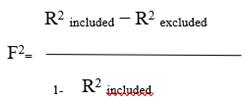
where .02, .15, and .35 are rough small, medium, and large benchmarks. PLSpredict assesses out-of-sample prediction; its comparative interpretation requires indicator-level prediction errors for both the PLS model and a linear-model benchmark.
Bootstrapping was employed to assess the statistical significance of both direct and specific indirect effects in the structural model. Direct effects were evaluated using path coefficients, t-statistics, p-values, and 95% confidence intervals. Specific indirect effects were examined to assess the mediating role of electronic trust (ET) in the relationships between information quality (IQ), live interaction (INT), and perceived authenticity (PA) and repurchase intention (RI). Specifically, the indirect paths IQ → ET → RI, INT → ET → RI, and PA → ET → RI were evaluated using their bootstrapped path coefficients, t-statistics, p-values, and 95% confidence intervals. An indirect effect was considered statistically significant when its 95% confidence interval did not include zero.
5. Results and discussion
- Sample and measurement model
Table 3 combines the six supplied frequency tables into a single profile of the 238 valid respondents. Percentages are valid percentages and therefore exclude the four system-missing records.
Table.3. Combined respondent and live-commerce-use profile
| Variable | Category | n | Valid % | |
| Gender | Male | 73 | 30.7 | |
| Female | 165 | 69.3 | ||
| Age | 18–30 years | 35 | 14.7 | |
| 31–40 years | 132 | 55.5 | ||
| 41–50 years | 36 | 15.1 | ||
| More than 50 years | 35 | 14.7 | ||
| Education | Secondary education or less | 38 | 16 | |
| University degree | 107 | 45 | ||
| Postgraduate studies | 60 | 25.2 | ||
| Professional certificates | 33 | 13.9 | ||
| Prior live-stream purchase | Yes | 238 | 100.0 | |
| Purchase frequency | Once | 95 | 39.9 | |
| Two to five times | 87 | 36.6 | ||
| More than five times | 56 | 23.5 | ||
| Primary platform | Facebook Live | 52 | 21.8 | |
| TikTok Live | 39 | 16.4 | ||
| Instagram Live | 68 | 28.6 | ||
| YouTube Live | 56 | 23.5 | ||
| Other | 23 | 9.7 | ||
Source: Author
The combined profile shows that women form the majority of the valid sample (69.3%), while men account for 30.7%. Respondents aged 31–40 are the dominant age group (55.5%); the other three age groups are comparatively balanced at approximately 15% each. Interpretation of education is incomplete because the largest recorded category (27.3%) is identified only by the code 5.00. Among the labelled categories, professional certificates are most common (25.2%), followed by secondary education or less (20.2%), university education (18.1%), and postgraduate studies (9.2%). The unlabelled category limits interpretation of the education profile.
The behavioral profile is especially relevant to a repurchase study. Although 39.9% had purchased only once, 60.1% had purchased through live streaming more than once: 36.6% reported two to five purchases and 23.5% reported more than five. The sample therefore contains substantial repeat-purchase experience rather than only prospective first-time buyers. Platform use is dispersed across Instagram Live (28.6%), YouTube Live (23.5%), Facebook Live (21.8%), TikTok Live (16.4%), and other platforms (9.7%). This distribution gives the analysis a multi-platform setting, although it does not by itself establish representativeness of the wider population.
Taken together, the demographic and usage results establish the empirical setting for the S–O–R model: respondents have encountered live-stream stimuli and possess transaction experience from which to form trust judgments and repurchase intentions. These frequencies do not test the causal S–O–R sequence, and gender, age, education, purchase frequency, and platform should not be interpreted as stimuli in the hypothesized model. Instead, the measurement and structural models test whether the specified environmental cues (S) shape electronic trust (O), which in turn shapes repurchase intention (R). Future robustness tests may use the profile variables as controls or grouping variables, subject to adequate group sizes and measurement invariance.
Several indicators exhibited outer loadings below the recommended threshold of 0.708. Their deletion was examined during the measurement model assessment. Based on the comparison conducted, removing the indicators resulted in less satisfactory model results. Therefore, the indicators were retained in the final measurement model, taking into account the overall measurement quality and the theoretical relevance of the items.
The measurement results are reported in Table 4. All constructs exceeded the recommended .70 threshold for Cronbach’s alpha, rhoA, and composite reliability. Composite reliability ranged from .836 to .908, showing satisfactory internal consistency without exceeding .95. AVE ranged from .520 to .623 and therefore supported convergent validity for every construct.
Table.4. Reflective measurement-model results
| Construct | Indicators/loading range | Α | ρA | CR | AVE |
| IQ | IQ1, IQ4–IQ6 (.670–.820) | .736 | .736 | .836 | .561 |
| INT | INT1–INT6 (.681–.854) | .878 | .892 | .908 | .623 |
| PA | PA1–PA6 (.631–.795) | .823 | .826 | .871 | .531 |
| ET | ET1, ET2, ET3, ET4, ET5, ET6 (.531–.868) | .807 | .822 | .863 | .520 |
| RI | RI1–RI6 (.539–.851) | .861 | .875 | .898 | .600 |
Source: Authors’ own elaboration based on SmartPLS 4 analysis
The assessment of the measurement model showed that several indicators had outer loadings below the recommended threshold of 0.708. Specifically, ET2 (0.612), ET3 (0.531), ETI1 (0.656), INT6 (0.681), IQ5 (0.670), PA6 (0.631), and RI6 (0.539) exhibited relatively low outer loadings. In addition, IQ1 (0.706) and PA1 (0.702) were slightly below the recommended threshold. However, outer loadings below 0.708 do not necessarily warrant indicator deletion. Decisions regarding indicator retention should consider construct reliability, convergent validity, as assessed by the average variance extracted (AVE), and content validity.
Table.5. Fornell–Larcker Criterion
| ET | INT | IQ | PA | RI | |
| ET | 0,721 | ||||
| INT | 0,233 | 0,789 | |||
| IQ | 0,251 | 0,413 | 0,749 | ||
| PA | 0,285 | 0,217 | 0,242 | 0,729 | |
| RI | 0,473 | 0,178 | 0,130 | 0,254 | 0,774 |
Source: Authors’ own elaboration based on SmartPLS 4 analysis
Analysis of the Fornell–Larcker Criterion
Table5 presents the results of the Fornell–Larcker criterion for assessing discriminant validity. The diagonal elements, representing the square root of the Average Variance Extracted (AVE) for each construct, are 0.721 for Electronic Trust (ET), 0.789 for Live Interaction (INT), 0.749 for Information Quality (IQ), 0.729 for Perceived Authenticity (PA), and 0.774 for Repurchase Intention (RI).
As shown in the table, the square root of the AVE for each construct exceeds its correlations with all other constructs. For example, the square root of the AVE for Electronic Trust (0.721) is greater than its highest correlation with another construct (Repurchase Intention = 0.473). Similarly, Live Interaction (0.789) exceeds its highest correlation (Information Quality = 0.413), Information Quality (0.749) exceeds its highest correlation (Live Interaction = 0.413), Perceived Authenticity (0.729) exceeds its highest correlation (Electronic Trust = 0.285), and Repurchase Intention (0.774) exceeds its highest correlation (Electronic Trust = 0.473).
These findings satisfy the Fornell–Larcker criterion (Fornell & Larcker, 1981), indicating that each construct shares more variance with its own indicators than with other constructs. Therefore, the measurement model demonstrates satisfactory discriminant validity.
Table.6. HTMT discriminant-validity matrix
| Construct pair | HTMT | Construct pair | HTMT |
| INT ↔ ET | 0.267 | PA ↔ IQ | 0.321 |
| IQ ↔ ET | 0.310 | RI ↔ ET | 0.556 |
| IQ ↔ INT | 0.518 | RI ↔ INT | 0.201 |
| PA ↔ ET | 0.335 | RI ↔ IQ | 0.158 |
| PA ↔ INT | 0.264 | RI ↔ PA | 0.293 |
Source: Authors’ own elaboration based on SmartPLS 4 analysis
Discriminant validity was assessed using the heterotrait–monotrait ratio (HTMT), the Fornell–Larcker criterion, and the cross-loading assessment. The HTMT values ranged from 0.158 to 0.556, remaining below the recommended thresholds of 0.85 and 0.90. The Fornell–Larcker results also indicate that the square roots of AVE on the diagonal (ET = 0.721, INT = 0.789, IQ = 0.749, PA = 0.729, and RI = 0.774) exceed the corresponding interconstruct correlations. Furthermore, the cross-loading results show that each indicator loads more strongly on its assigned construct than on the other constructs. Taken together, these findings support discriminant validity according to the conventional HTMT, Fornell–Larcker, and cross-loading criteria. However, because bootstrap confidence intervals for HTMT were unavailable, the inferential assessment of discriminant validity could not be completed.
5.2 Structural model and direct effects
The inner VIF values reported in Table 9 range from 1.000 to 1.243, indicating no apparent collinearity concern under commonly used thresholds. The three quality dimensions account for 12.9% of the variance in electronic trust (R2 = .129, adjusted R2 = .118); 87.1% remains unexplained by this model and may reflect omitted determinants, measurement error, individual differences, or other sources Electronic trust accounts for 22.4% of the variance in repurchase intention (R2 = .224, adjusted R2 = .220). Both values call for restrained claims about explanatory scope.
Table.7. Model quality and predictive assessment
| Endogenous construct | R² | Adjusted R² | Q²predict | Assessment |
| Electronic trust | 0.129 | 0.118 | 0.093 | Positive prediction |
| Repurchase intention | 0.224 | 0.220 | 0.055 | Positive prediction |
Source: Authors’ own elaboration based on SmartPLS 4 analysis
The reported PLSpredict Q2 predict values are positive for ET (.093) and RI (.055). The reported RMSE/MAE values are .961/.785 for ET and .979/.806 for RI. The supplied output does not include the indicator-level PLS-versus-linear-model error comparisons or all settings needed to reproduce PLSpredict; consequently, comparative predictive performance cannot be classified from these figures alone.
Effect-size results show that ET has a medium effect on RI (f 2 = .288). PA has a small effect on ET (f 2 = .052), IQ reaches the small-effect threshold (f 2 = .020), and LI has a negligible-to-small effect (f 2 = .015). Thus, statistical significance should not be confused with practical magnitude.
Table. 8. PLSpredict Results: Comparison of PLS-SEM and Linear Model Prediction Errors
| Indicator | Q²predict | PLS-SEM RMSE | LM RMSE | IA RMSE | PLS-SEM MAE | LM MAE | IA MAE |
| ET2 | 0.031 | 0.760 | 0.790 | 0.772 | 0.541 | 0.585 | 0.550 |
| ET3 | −0.002 | 0.844 | 0.873 | 0.843 | 0.659 | 0.695 | 0.631 |
| ET5 | 0.074 | 0.796 | 0.822 | 0.827 | 0.645 | 0.656 | 0.694 |
| ET6 | 0.055 | 0.660 | 0.696 | 0.679 | 0.538 | 0.556 | 0.585 |
| ETI1 | 0.054 | 0.729 | 0.766 | 0.750 | 0.539 | 0.571 | 0.511 |
| ETI4 | 0.075 | 0.782 | 0.805 | 0.813 | 0.621 | 0.630 | 0.675 |
| RI1 | 0.042 | 0.785 | 0.808 | 0.802 | 0.578 | 0.629 | 0.565 |
| RI2 | 0.045 | 0.801 | 0.838 | 0.820 | 0.632 | 0.676 | 0.633 |
| RI3 | 0.039 | 0.752 | 0.787 | 0.767 | 0.585 | 0.627 | 0.580 |
| RI4 | 0.031 | 0.833 | 0.852 | 0.846 | 0.663 | 0.694 | 0.652 |
| RI5 | 0.034 | 0.958 | 0.991 | 0.975 | 0.807 | 0.808 | 0.830 |
| RI6 | 0.006 | 0.944 | 0.984 | 0.947 | 0.700 | 0.742 | 0.706 |
Source: Authors’ own elaboration based on SmartPLS 4 analysis
The PLSpredict results indicate that 11 of the 12 indicators have positive Q²predict values, whereas ET3 has a slightly negative value (−0.002). The PLS-SEM model yields lower RMSE values than the linear model (LM) for all 12 indicators. Similarly, PLS-SEM produces lower MAE values for all indicators, although the difference for RI5 is negligible (0.807 versus 0.808). These results indicate that the model demonstrates predictive relevance for most indicators and yields lower prediction errors than the linear benchmark across the indicators examined.
Table.9.Inner VIF Values for the Structural Model
| Path | VIF | Assessment |
| ET -> RI | 1,000 | No apparent collinearity concern |
| INT -> ET | 1,227 | No apparent collinearity concern |
| IQ -> ET | 1,243 | No apparent collinearity concern |
| PA -> ET | 1,081 | No apparent collinearity concern |
Source: Authors’ own elaboration based on SmartPLS 4 analysis
Collinearity was assessed using the inner variance inflation factor (VIF). The VIF values ranged from 1.000 to 1.243, remaining below the commonly used thresholds of 3.3 and 5. These results indicate that collinearity is not a concern among the predictor constructs in the estimated structural model.
Study model:
Figure 1. Results of structural relationships
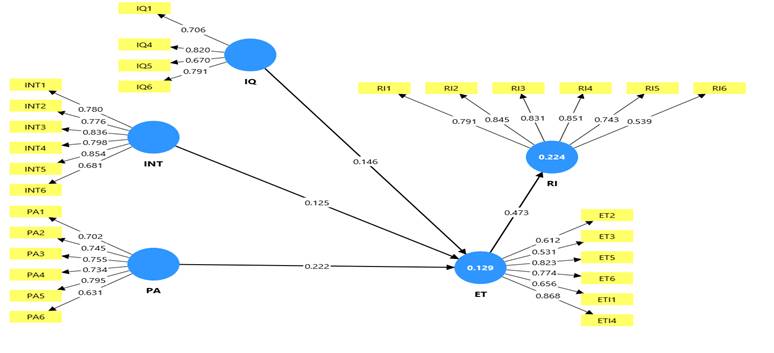
Source: Authors’ own elaboration based on SmartPLS 4 analysis
Table.10. Direct effects
| H | Path | Β | Mean | SE | T | P | Decision | ||
| H1 | IQ → ET | .146 | .153 | .071 | 2.064 | .039 | Supported | ||
| H2 | INT → ET | .125 | .132 | .056 | 2.235 | .025 | Supported | ||
| H3 | PA → ET | .222 | .233 | .061 | 3.631 | < .001 | Supported | ||
| ET → RI | .473 | .482 | .048 | 9.886 | < .001 | Supported | |||
Source: Authors’ own elaboration based on SmartPLS 4 analysis
All four estimated direct paths were positive and statistically significant. Information quality was associated with electronic trust (β = .146, t = 2.064, p = .039), supporting H1; live interaction was also associated with trust (β = .125, t = 2.235, p = .025), supporting H2. Perceived authenticity had the largest coefficient among the three trust antecedents (β = .222, t = 3.631, p < .001), supporting H3. Electronic trust was positively associated with repurchase intention (β = .473, t = 9.886, p < .001), supporting H4. Bootstrap means were close to the original estimates. The supplied output does not include 95% confidence intervals or identify the number of resamples, limiting assessment of estimate precision.
5.3 Mediation
Table.11. Specific indirect effects through electronic trust
| H | Indirect path | Β | Mean | SE | T | P | Decision | |||
| H5 | IQ → ET → RI | .069 | .073 | .034 | 2.027 | .043 | Supported | |||
| H6a | INT → ET → RI | .059 | .064 | .028 | 2.099 | .036 | Supported | |||
| H6b | PA → ET → RI | .105 | .112 | .032 | 3.285 | .001 | Supported | |||
Source: Authors’ own elaboration based on SmartPLS 4 analysis
All three specific indirect effects were positive and statistically significant: information quality to repurchase intention through trust (β = .069, t = 2.027, p = .043; H5), live interaction through trust (β = .059, t = 2.099, p = .036; H6a), and perceived authenticity through trust (β = .105, t = 3.285, p = .001; H6b). The model does not estimate direct paths from IQ, INT, or PA to RI. Accordingly, the results support specific indirect associations but do not establish full or partial mediation. Nor can the indirect effects be ranked statistically without bootstrapped contrasts.
Table. 12. Bootstrapping Confidence Intervals for Direct Effects
| Path | β | t-value | p-value | 95% CI Lower (2.5%) | 95% CI Upper (97.5%) | |
| ET → RI | 0.473 | 9.886 | 0.000 | 0.357 | 0.550 | |
| INT → ET | 0.125 | 2.235 | 0.025 | 0.004 | 0.223 | |
| IQ → ET | 0.146 | 2.064 | 0.039 | 0.005 | 0.280 | |
| PA → ET | 0.222 | 3.631 | 0.000 | 0.095 | 0.333 | |
Source: Authors’ own elaboration based on SmartPLS 4 analysis
The confidence intervals reported above are bias-corrected 95% bootstrap confidence intervals. A p-value of 0.000 should be reported in the manuscript as (p < 0.001).
Table .13. Bootstrapping Confidence Intervals for Specific Indirect Effects
| H | Path | β () | t-value | p-value | 95% CI Lower (2.5%) | 95% CI Upper (97.5%) |
| H5 | IQ → ET → RI | 0.069 | 2.027 | 0.043 | 0.002 | 0.133 |
| H6a | INT → ET → RI | 0.059 | 2.099 | 0.036 | 0.001 | 0.110 |
| PA → ET → RI | 0.105 | 3.285 | 0.001 | 0.043 | 0.165 |
Source: Authors’ own elaboration based on SmartPLS 4 analysis
The confidence intervals are bias-corrected 95% bootstrap intervals. All intervals exclude zero, supporting the statistical significance of the three specific indirect effects.
.6 Conclusion
6.1 Interpretation of the findings
The estimated paths are consistent with the proposed S–O–R sequence: information quality, live interaction, and perceived authenticity are positively associated with trust, and trust is positively associated with repurchase intention. The association between authenticity and trust is numerically largest among the three quality antecedents (β = .222), followed by information quality (β = .146) and live interaction (β = .125). These coefficient differences are descriptive; no pairwise contrasts were supplied to establish that the paths differ statistically. The three specific indirect effects are positive and significant, but the omitted direct paths mean that the model cannot distinguish full from partial mediation. The authenticity result is consistent with the idea that consumers use perceived sincerity and transparency to judge whether a live seller can be relied upon. In this setting, authenticity may help interpret the streamer’s claims and intentions, while information quality offers more limited evidence about the transaction itself. The relatively small effect sizes for information quality (f 2 = .020) and interaction (f 2 = .015) caution against treating statistical significance as evidence of large practical effects. The associations are also consistent with prior work linking information-system quality to user judgments and live-commerce information to consumer response (DeLone and McLean, 2003; Shi et al., 2025); however, the present data do not identify why authenticity has the largest coefficient.
Trust is positively associated with repurchase intention (β = .473, f 2 = .288), consistent with established e-commerce research on trust under vulnerability (Gefen et al., 2003; Pavlou, 2003; Kim et al., 2008). Yet the model explains only 12.9% of the variance in trust and 22.4% in repurchase intention. The remaining variance is not attributable to any single known factor in these data; satisfaction, price fairness, product fit, fulfillment, and after-sales service are possible variables for future models, not findings of this study.
6.2 Algerian context
The Algerian setting provides contextual rather than uniquely theoretical novelty. Payment availability, delivery reliability, cash-on-delivery practices, and variation in digital readiness may shape how consumers interpret trust cues. None of these conditions was measured in the survey, so they cannot explain the observed path magnitudes. The findings should be read as associations within the sampled consumers, not as evidence that any specific feature of the Algerian e-commerce infrastructure caused the results. Future studies should measure these conditions directly and compare them across regions and platforms.
6.3 Theoretical contributions
The study contributes a context-specific test of an established S–O–R and trust-based account, rather than a new theoretical mechanism. It evaluates a particular combination of informational, interactive, and authenticity cues against a post-purchase intention in an Algerian sample. The results also illustrate the value of reporting specific indirect effects separately from direct paths: the indirect estimates are significant, but the available specification does not support a classification of mediation as full or partial.
6.4 Managerial implications
The relatively largest observed path to trust is for perceived authenticity, although the effect is small and was not formally contrasted with the other paths. Sellers can therefore prioritize transparent claims, disclosure of commercial relationships, and consistency between demonstrations and delivered products, while treating these recommendations as consistent with the observed associations rather than proven causal interventions. Accurate product information remains important even though its estimated effect size was small. Interaction had the smallest estimated effect size among the three quality cues. Sellers may focus on relevant answers and clear follow-up rather than message volume alone; the cross-sectional findings.
do not establish that this operational change will increase trust.
Transparent sponsorship and product presentation may help consumers assess authenticity. Platforms can complement seller practices with accessible complaint handling and clear transaction terms. Payment and delivery constraints are relevant priorities for the Algerian setting, but neither these constraints nor the effectiveness of specific remedies was tested in this study.
7. Limitations and Future Research
Revised limitations and future research Several limitations qualify the findings. First, the cross-sectional design does not establish temporal precedence or causality. The use of a single self-report questionnaire also creates a risk of common-method bias, which could not be evaluated fully from the supplied results. Future studies should combine survey measures with behavioral transaction data, use longitudinal designs, and apply procedural and statistical approaches to assess common-method variance.
Second, the sample was recruited through social media using a non-probability procedure and was concentrated in M’Sila and Médéa. Although 238 valid responses were analyzed, the sample cannot be assumed to represent all Algerian consumers. Future research should use broader regional coverage, more systematic recruitment, and larger samples where multi-group comparisons are intended.
Third, the model’s explanatory power is limited (R² = .129 for e-trust and R² = .224 for repurchase intention). Additional constructs may improve explanatory coverage, but they should be selected on theoretical grounds and measured explicitly. Fourth, several indicators have outer loadings below .708, including ET3 and RI6. Their retention requires item-level sensitivity analysis and a stronger explanation of content validity. Fifth, direct paths from information quality, live interaction, and perceived authenticity to repurchase intention were not included in the supplied structural model; therefore, the current results do not permit a full-versus-partial mediation conclusion. Finally, future studies should report the full questionnaire, translation and pilot procedures, HTMT confidence intervals, bootstrap settings, and complete predictive assessment outputs.
8. Conclusion
In this sample of 238 Algerian live-commerce consumers, information quality, live interaction, and perceived authenticity were positively associated with electronic trust, and trust was positively associated with repurchase intention. Their specific indirect associations through trust were significant, while the model explained 12.9% of trust variance and 22.4% of repurchase-intention variance. These findings offer a focused, context-specific contribution to research on live-commerce quality and relationship continuity, but the modest explanatory power, cross-sectional design, and restricted sample require cautious interpretation. Since the direct quality-to-repurchase paths were not estimated, the results do not establish full or partial mediation.
References
- Bhattacherjee, A. (2001). Understanding information systems continuance: An expectationconfirmation model. MIS Quarterly, 25(3):351–370. https://doi.org/10.2307/3250921?utm_source=chatgpt.com
- DeLone, W. H. and McLean, E. R. (2003). The DeLone and McLean model of information systems success: A ten-year update. Journal of Management Information Systems, 19(4):9–30. https://doi.org/10.2307/3250921?utm_source=chatgpt.com
- Faul, F., Erdfelder, E., Buchner, A., and Lang, A.-G. (2009). Statistical power analyses using G*Power 3.1: Tests for correlation and regression analyses. Behavior Research Methods, 41(4):1149– 1160. https://pubmed.ncbi.nlm.nih.gov/19897823/?utm_source=chatgpt.com
- Fornell, C. and Larcker, D. F. (1981). Evaluating structural equation models with unobservable variables and measurement error. Journal of Marketing Research, 18(1):39–50. https://doi.org/10.1177/002224378101800104?utm_source=chatgpt.com
- Gefen, D., Karahanna, E., and Straub, D. W. (2003). Trust and TAM in online shopping: An integrated model. MIS Quarterly, 27(1):51–90. https://doi.org/10.2307/30036519?utm_source=chatgpt.com
- Hair, J. F., Hult, G. T. M., Ringle, C. M., and Sarstedt, M. (2022). A Primer on Partial Least Squares Structural Equation Modeling (PLS-SEM). Sage, Thousand Oaks, CA, 3 edition. https://us.sagepub.com/en-us/nam/a-primer-on-partial-least-squares-structural-equation-modeling-pls-sem/book270548?utm_source=chatgpt.com
- Henseler, J., Ringle, C. M., and Sarstedt, M. (2015). A new criterion for assessing discriminant validity in variance-based structural equation modeling. Journal of the Academy of Marketing Science, 43(1):115–135. https://doi.org/10.1016/j.dss.2007.07.001?utm_source=chatgpt.com
- Kim, D. J., Ferrin, D. L., and Rao, H. R. (2008). A trust-based consumer decision-making model in electronic commerce: The role of trust, perceived risk, and their antecedents. Decision Support Systems, 44(2):544–564. https://doi.org/10.1016/j.dss.2007.07.001?utm_source=chatgpt.com
- Lu, B. and Chen, Z. (2021). Live streaming commerce and consumers’ purchase intention: An uncertainty reduction perspective. Information & Management, 58(7):103509. https://doi.org/10.1016/j.im.2021.103509?utm_source=chatgpt.com
- McKnight, D. H., Choudhury, V., and Kacmar, C. (2002). Developing and validating trust measures for e-commerce: An integrative typology. Information Systems Research, 13(3):334–359. https://doi.org/10.1287/isre.13.3.334.81?utm_source=chatgpt.com
- Oliver, R. L. (1980). A cognitive model of the antecedents and consequences of satisfaction decisions. Journal of Marketing Research, 17(4):460–469. https://doi.org/10.1177/002224378001700405?utm_source=chatgpt.com
- Ou, C. X., Pavlou, P. A., and Davison, R. M. (2014). Swift guanxi in online marketplaces: The role of computer-mediated communication technologies. MIS Quarterly, 38(1):209–230. https://doi.org/10.25300/MISQ/2014/38.1.10?utm_source=chatgpt.com
- Pavlou, P. A. (2003). Consumer acceptance of electronic commerce: Integrating trust and risk with the technology acceptance model. International Journal of Electronic Commerce, 7(3):101–134. https://doi.org/10.1080/10864415.2003.11044275?utm_source=chatgpt.com
- Preacher, K. J. and Hayes, A. F. (2008). Asymptotic and resampling strategies for assessing and comparing indirect effects in multiple mediator models. Behavior Research Methods, 40(3):879–891. https://doi.org/10.3758/brm.40.3.879?utm_source=chatgpt.com
- Qin, F., Zhang, X., Yang, X., and Guo, X. (2025). Livestreaming commerce service quality measurement and its effect on swift guanxi, trust, and repurchase intention. Total Quality Management & Business Excellence, 36(3–4):1–26. https://www.tandfonline.com/doi/abs/10.1080/14783363.2024.2331776?utm_source=chatgpt.com
- Shi, H., Wang, Y., and Gong, X. (2025). Which type of information’s quality in live streaming commerce captures consumers’ attention the most? considering the moderating role of network size. Asia Pacific Journal of Marketing and Logistics, 37(4):1110–1132. https://doi.org/10.1108/APJML-04-2024-0528?utm_source=chatgpt.com
- Sun, Y., Shao, X., Li, X., Guo, Y., and Nie, K. (2019). How live streaming influences purchase intentions in social commerce: An IT affordance perspective. Electronic Commerce Research and Applications, 37:100886. https://doi.org/10.1016/j.elerap.2019.100886?utm_source=chatgpt.com
- Wang, Y., Lu, Z., Cao, P., Chu, J., Wang, H., and Wattenhofer, R. (2022). How live streaming changes shopping decisions in e-commerce: A study of live streaming commerce. Computer Supported Cooperative Work, 31(4):701–729. https://doi.org/10.1007/s10606-022-09439-2?utm_source=chatgpt.com
- Wongkitrungrueng, A. and Assarut, N. (2020). The role of live streaming in building consumer trust and engagement with social commerce sellers. Journal of Business Research, 117:543–556. https://doi.org/10.1016/j.jbusres.2018.08.032?utm_source=chatgpt.com
- Wu, Y. and Huang, H. (2023). Influence of perceived value on consumers’ continuous purchase intention in live-streaming e-commerce—mediated by consumer trust. Sustainability, 15(5):4432. Xu, X., Wu, J.-H., and Li, Q. (2020). What drives consumer shopping behavior in live streaming commerce? Journal of Electronic Commerce Research, 21(3):144–167. https://doi.org/10.3390/su15054432?utm_source=chatgpt.com
- Zhang, M., Qin, F., Wang, G., and Luo, C. (2020). The impact of live video streaming on online purchase intention. The Service Industries Journal, 40(9–10):656–681. https://doi.org/10.1080/02642069.2019.1576642?utm_source=chatgpt.com