Corresponding author 1) Atiq ur Rehman ,PhD Scholar, School of Media Studies, the Superior university, Lahore, Pakistan ( Atiqch365@gmail.com )
2) Dr. Nasir Khan, Assistant Professor, School of Media Studies, the Superior University, Lahore, Pakistan
ABSTRACT
Electronic media remains a dominant source of political information in Pakistan, where television talk shows play a central role in shaping voter perception and prioritizing political issues. This study investigates how prime-time political talk shows influenced the issue awareness, political attitudes, and electoral decision-making of young adults during the 2024 General Elections. Using a quantitative survey of 449 respondents aged 18 to 35, the research examines correlations between exposure to talk shows, trust in anchors, perceived credibility of information, and issue salience. The findings reveal that frequent exposure to political talk shows significantly influences which issues respondents consider most important, demonstrating both first-level (issue awareness) and second-level (attribute emphasis) agenda-setting effects. The conclusion made is a subtle correlation between exposure to media and voting patterns. The study concludes that talk shows have substantial power to frame national debates, but the uneven journalistic standards and selective framing highlight the need for stronger media literacy and ethical broadcasting practices.
Keywords: Electronic Media, Prime time talk shows, voting behavior, Youth, General Elections Pakistan 2024
1. INTRODUCTION
The 2024 General Elections in Pakistan were a historic democratic exercise marked by an intricate political environment, alongside an unprecedented mobilization of the young electorate (estimated to be 48 percent).1 It was marked by a very sharp generational gap in voting preference, and a level of skepticism towards the political status quo that was often manifested through the support of non-traditional political players (Gallup Pakistan, 2024).
In modern societies the media has become the forefront in political communication, which has affected the opinion of the people and the way citizens perceive the political realities. The advent and development of the private television channels in Pakistan have changed significantly the way politics are debated, contested, and distributed among people in Pakistan. The political talk shows that also occupy prime-time television schedules have developed into a major source of political information to millions of viewers. Through these programs, one can get the nonstop commentary on the latest events, bring in politicians and policy makers to present their side of the case, and discuss the upcoming political trends as they unfold. Consequently, the media as a political agenda-setter has become more decisive particularly in the election season when people are most interested and most political struggles are at peak. The agenda-setting ability of the media implies that the media could not only inform but also influence the perception of the most important issues among the population. As far as the 2024 General elections in Pakistan are concerned, this begs the question how political talk shows influenced voting priorities and presented political discourse among the people, in particular the youth who the majority electorate are (Sohail, 2024).
The broadcast media of Pakistan has significantly changed, and this has been especially following the year 2002 when the government eased its control on the private television networks. Prior to this time, the direction of political information flow was dominated by the state-operated platforms, most of which were Pakistan television corporation (PTV). Political stories had restrictions and were usually standardized and associated more with government interests (Saleem, 2024).
Nevertheless, the liberalization of the media industry created an opportunity to have many individual news channels, including Geo News, ARY News, Dunya News, Express News, and 92 News. These networks, in addition to bringing competitive reporting, produced political talk shows, which were one of the most popular types of TV programs. These are talk shows and the high-stakes environment allows the content production to be based on ratings. Anchors are now personalities, and many of them have established a reputation as an influential commentator instead of an unbiased moderator (Salih & Asif, 2025).
They are not just observers of the happenings in the political arena, but empowered interpreters of those events, interrogators of political players, and present issues in specific ways. The commercial aspect of the private channels has also promoted media sensationalism with dramatic presentation and confrontational debate being given preference to attract the attention of viewers. The transformation has made the masses more involved, though, it has raised issues about polarization, partisanship and selective packaging of information.
Also, the broadcast media plays alongside a fast-growing digital media system. Talk shows clips are spreading on the social media channels such as YouTube, Tik Tok, Facebook, and X (Twitter), which widen their reach beyond the usual television viewers. Even the audiences that do not habitually watch the whole talk shows are exposed to chosen excerpts, commentaries and opinion-oriented clips that define the political perceptions. It has also increased the agenda-setting capabilities of the political talk shows, particularly the young voters who are very active on the internet due to this convergence of broadcast and digital platforms (Aldamen & Thasleem, 2025).
1.1 The Critical Role of Prime Time Talk Shows
Although digital media are in the limelight, in Pakistan, the Prime-Time Political Talk Shows on the traditional TV channels are still a mainstream and a powerful genre of mass communication (Shah et al., 2025). These programs are the main platform on which the national political agenda can be set, the main issues in shaping, and the performance and perceived credibility of political leaders are presented to a vast, multi-generational audience (Iftikhar et al., 2024; ResearchGate, 2024). More importantly, persuasive strategies and rather biased appraisals that powerful anchors and panellists employ are known to have a considerable effect on the political effectiveness of the viewers, the feeling that one can influence the political process, which is one of the most important antecedents of voting behaviour (Ashraf et al., 2023; Iftikhar et al., 2024). In actual sense, a study that directly targeted university students in Lahore discovered that viewing of talk show plays a significant role in determining political efficacy and political knowledge although the direct relationship with voting intention is at times controversial (Iftikhar et al., 2024).
This is because Pakistan has a relatively youthful demographic, where 64 percent of the population is below 30 years old. National politics are tremendously affected by this population group. The young people are not only most of the population but also a segment of the electorate which is becoming very critical.
Their political involvement is crucial to influencing the results of the elections, dictating the political discourse, and the rise of political parties to the national and provincial levels. Traditionally the turnout of the youth in elections has been up and down, because of political disenchantment, institutional political illiteracy, and distrust of the system of governance. Nevertheless, over the past few years, the younger generation has shown a significant interest in political events, which can be explained by the popularity of the coverage of political discussions on social and electronic media (Bukhari et al., 2024).
The talk shows especially provide a mediating stance between the political institutions and the young citizens. They give explanations of intricate political events, controversies, and decisions in simplified and conversational way. To many youths, who might not be keen on parliamentary activities or policy books, talk shows are the source of political education. Presentation of issues to youth has a great influence on their political behaviour. When economic crises, failures in governance, charges of corruption or political feuds are frequently featured in talk shows, they influence the way young voters interpret national priorities (Zeib, 2021).
Attitudes, the emotional reaction to political actors, and trust to the leadership are also driven by media exposure. In the time of the election campaigns, the talk show narratives are monitored by the political parties, candidates, and public interest groups because they understand that they can change the mood of the people and mobilize them to vote. Moreover, identity-building is a factor that is linked to youth political participation in Pakistan.
First-time voters, university students, and the upcoming professionals tend to use the narratives that media offers to form their political orientation, see what issues are of the most interest to them, and what leaders fit their expectations related to future governance. The broadcast media and in particular the prime time talk shows are therefore primed to influence the youth politically in terms of political awareness and participation during elections (Brand, 2025).
1.3 Research Question: How Do Talk Shows Frame Key Issues and Set Political Priorities?
Considering the increasing power of the media in shaping political perceptions, this study aims at examining how prime time talk shows contributed towards awareness of issues among the population during the 2024 General Elections. The core of the research interest is to explain how these programs chosen, highlighted, and framed on the important political issues and how these decisions affected the political priorities of young voters. This dynamic can be analysed with the help of the agenda-setting theory. It proposes that the media is not merely a mirror of reality; it actively constructs it by selectively taking on what issues to be reflected on and how they are to be discussed. When inflation, corruption investigations, fairness during elections or security are always stressed in the talk show, the issues become the centre of focus in the minds of the audience (Valenzuela et al., 2017).
1.2 Research Gap and Study Context
Whereas the available literature has proven the overall association between watchers of talk shows and their heightened awareness of political issues (Ahmed, 2020), and the recent studies report about a surge in youth voting in the 2024 elections (Ali et al., 2024), a gap in the research is present. The dearth of recent, specifically focused, and granular studies which specifically determine the direct and contemporary influence of prime time talk shows on the actual voting behaviour not only the intention, but the effectiveness of the youth electorate in Punjab, Pakistan, after the hotly contested and media-fueled 2024 General Elections. Punjab, the electoral core and the most populous province is critical in shaping the national political performance and thus a regional study is essential (Sial, 2025).
This study, therefore, aims to address this critical gap. Drawing on established communication theories such as Agenda-Setting and Cultivation, this research investigates the relationship between exposure to prime time talk shows and the manifest voting choices of youth (aged 18-29) in Punjab during the 2024 General Elections. The findings will contribute significantly to media studies and psephology, offering timely insights into the distinct influence of legacy media in an increasingly digitalized, yet politically charged, democratic context.
1.3 Problem Statement / Rationale
Political talk shows play a central role in shaping political narratives in Pakistan, yet their influence on youth political perception and voting behaviour remains underexamined. Youth audiences are frequently exposed to discussions where political issues are framed selectively, often reflecting partisan or sensationalized viewpoints. This raises the question of whether such mediated discourse informs political understanding or contributes to biased political attitudes. Therefore, this study investigates how exposure, framing, trust, and perceived credibility of talk shows influence issue salience and voting preferences among young voters.
1.4 Research Objectives of the Study
1.To explore the association between exposures to prime time talk shows and the voting behaviour of youth.
2.To determine whether electronic media is more effective than other elements such as broderie, local groups, political leaders, and parties on the voting patterns of the youth.
3. To investigate empirically the influence of talk shows on voting behaviour of youth in the light of Agenda Setting Theory.
4.To determine if prime time talk shows have a positive or negative effect on young people’s voting behaviour
1.5 Revised Hypotheses
H1: Higher exposure to political talk shows is positively associated with greater issue salience among youth.
H2: The frequency of viewing political talk shows significantly predicts youth voting behavior.
H3: Higher trust in talk show anchors is positively related to youth perceptions of political leaders.
H4:. Perceived credibility of political talk shows has a significant positive effect on political decision-making among youth
H5: Exposure, viewing frequency, trust, and credibility collectively have a significant influence on youth voting preferences.
2. LITERATURE REVIEW
Media-political behavioural relationship has been a common subject matter in the political communication studies, especially in the agenda-setting and framing traditions. The electronic media has emerged as a powerful tool of forming political discourse and shaping the opinion of the people in Pakistan and the South Asian region at large. The expansion of 24-hour news media channels has created a media culture in which the political talk shows are used to center on the issues, which are crucial and how such issues need to be understood. The literature review covers three key aspects of interest to the current study, including agenda-setting and framing in South Asian political communication, the influence of anchors and bias of framing in talk shows, and a comparative analysis of India, Bangladesh and the western democracies (Garimella & Datta, 2024).
2.1 Agenda-Setting and Framing in South Asian Political Communication
The agenda-setting theory goes on to argue that the media controls people by dictating the matters that are to be discussed. Firstly, put forward in the early 1970s, the concept of agenda-setting research determined that the salience of issues in the media coverage is closely correlated with the perceived issue importance by the population. However, with the penetration rate of media in the South Asian region increasing at a rate much faster than that of political rivalry, the media control over political priorities has been especially sharp (Hossain et al., 2025).
Political talk shows are one of the primary vehicles in Pakistan where issues of political content are launched, argued, and discussed. Pakistani political communication studies have shown that those viewers who habitually watch talk shows are likely to take over the matters raised on the show and make them national issues. Some of the recurrent themes of talk shows include corruption, governance crises, judicial proceedings and economic instability. These themes are repeated, which serves to drive the message among people that these matters have to be taken seriously.
In that way, the influence of media as the agenda-setter is particularly effective in the period of elections when rival parties strive to influence the priorities of the nation with the help of televised debates and discussions. Framing theory builds on the agenda setting theory by describing the ways in which the media influences not only what people think about but how they think about it as well. The process of framing refers to the choices made about a problem and the way they are presented in a way that facilitates a certain explanation.
Talk shows in Pakistan are often based on narrative framing to place blame, designate villains/heroes and to organize conflict. Polarized political coverage is frequently associated with this type of framing whereby channels or shows tend to be biased towards a particular political party/ ideology. Consequently, media framing shape’s opinion of the political actors and creates an impression of legitimacy and trustworthiness (Culloty et al., 2025).
2.2 The Role of Anchors, Framing Bias, and Repetition
In Pakistan, political talk show anchors are in the frontline in determining the tone of the discussion and the direction it takes. In contrast to traditional news outlets, where journalists are supposed to stay neutral, Pakistani talk shows anchors tend to provide their opinion, criticize or justify political participants, and determine the way events should be perceived. Numerous anchors have established their own cults and fan bases, and they too are opinion leaders. Anchors can affect framing in several ways: in terms of choice of guests, the way questions are framed and commentary made prior to and after the discussion. It is especially important to choose the guests (Moore).
This leads to the biased reporting of specific sides of the argument when political representatives of specific parties are brought on-board time and again, and less attention is given to others. On the same note, the wording of the questions may put the arguments into a pre-destined conclusion which strengthens the ideological position of the anchor. The importance of the role of repetition in media frame reinforcement is critical. The issue becomes salient in the minds of people when it is talked about in several shows and channels about the same issue. This is particularly evident with the election campaigns where the big issues are replicated over and over so that people can remain conscious of them. I have noticed in Pakistan that the problems of inflation, corruption accusations, trials, and foreign policy are recycled in shows, which brings a sense of immediacy and involvement to the audienceb (Thompson, 2021).
The appeal to repetition is also enhanced by the spread of the clips of talk shows on such social media platforms like YouTube, Tik Tok, and Facebook. Even those who do not see entire shows are subjected to selectively edited videos that propagate narratives. Through this, anchors and channels can reach beyond the television viewers and influence the digital discourse and online political participation too (Sajid et al., 2024).
2.3 Comparative Insights from India, Bangladesh, and Western Democracies
Comparative viewpoint aids in creating a background of the place played by the talk shows in Pakistan. Political talk shows in India are similar in their tones, style and role. The commercialization of the Indian media has produced programming that is focused on conflict based debate and sensationalism. Arnab Goswami is an example of anchors who adopt an assertive and confrontational format and influence political discourse by framing emotionally. India also has a high degree of media polarization just like in Pakistan that is based on various channels affiliating to various political groups.
In India, the agenda-setting capability of the talk shows has especially played a crucial role during an election period where the media discussions affect how the populace views nationalism, security issues, and the performance of the political parties. Political talk shows became a significant political communication media in Bangladesh after the growth of the private broadcasting (Hossain et al., 2025).
As the studies have shown, in Bangladesh, talk shows are commonly the ideological battlegrounds among the large political parties. The way political issues are framed is often associated with political patronage, and the media can often amplify the partisan nature of political issues, instead of promoting civic consciousness and neutrality. Bangladesh, however, is following the same pattern as Pakistan in putting the trend of young people depending on talk shows and social media to create political opinion.
The western democracies are more likely to have more regulatory structures to achieve a journalistic balance. Although political commentary shows are regular, it is sometimes more evident where the factual reporting is separated and opinion-based programming. Also, increased media literacy in Western settings can help viewers to evaluate news reporting more critically. Nevertheless, the polarization of the Western media has also risen in the recent years, particularly with the emergence of ideologically motivated cable news-delivering channels. It implies that the media systems are diverse, but the fundamental processes of agenda-setting and framing are global (Hossain et al., 2025; Sidhu, 2025).
3. THEORETICAL FRAMEWORK
The paper is based on two important theoretical traditions in political communication research first- and second-level agenda-setting theory and media priming theory. These models describe the ways media informs not only the masses about the political matters but also the standards by which political participants are judged. They are especially applicable to the Pakistani media space where political talk shows provide a significant source of political news among most citizens and, in particular, the youth. The theoretical lens would enable the study to examine the prosody of the prime time talk shows in influencing the political priorities and perceptions given the 2024 General Elections. Agenda-setting theory suggests that the media can greatly affect the social agenda through influencing the issues to be given attention. The essence is that the problems that are most reported by the media are the ones that the population considers the most vital. This is referred to as first-level agenda-setting, and it has been proven in many political communication situations (Asghar et al., 2025).
It is not the media coverage that dictates what people think but it is an indication of what people should think given the fact that it creates the importance of issues compared to others. The agenda-setting role of the media is particularly powerful in the situation of Pakistan, where lots of citizens are dependent on the information given on TV, instead of formal political literature or institutional sources. The political talk shows especially, devote much-lengthy discussions to issues of choice like economic instabilities, allegations of corruption, leadership tussles and foreign policy struggles.
Such problems are put into the focus of politics not always because they represent the entire repertoire of the national problems, but simply because they are reiterated in the air. Therefore, talk shows can be described as agenda-builders because they promote certain issues to the national interest especially at the time of elections. But agenda-setting does not only mean identifying the issues that are salient in the public. Second-level agenda-setting or attribute agenda-setting is a process by which the media influences the lens through which an issue or political actor is perceived. The media is not just raising concerns at this level but also constructing the way to conceptualize those concerns. As an example, a talk show can not only introduce the subject of economic inflation as an increase of the cost of living but as the direct cause of incompetence of a particular political figure or a government (Maryam et al.).
Repeated associations of a problem with specific people, parties, or ideologies determine the emotional and cognitive responses of the people by talk shows. During the 2024 election campaign, numerous talk shows invariably cast issues on inflation, government crisis, the judicial clash, and demonstrations in a manner that was perceived to implicate or endow credibility to some of the parties. The choice of guests, the nature of questioning, and the explanation made by anchors play off to influence the way the viewers will see political responsibility and leadership competence. This process emphasizes the second-level agenda-setting effect when media do not only inform audiences of what they should think about, they inform audiences how to judge political actors regarding those problems (Kazmi & Haq).
The importance of both first- and second-level agenda-setting is likely to be high among the youth who frequently do not obtain first-hand political experiences and must rely on mediated interpretations. Young audiences will tend to embrace the priorities and judgmental structures, which the media constantly advance, especially when such messages are emotive, story-oriented, and introduced by personalities whom they know well. The agenda-setting theory, therefore, offers a powerful conceptual base through which the influence of political talk shows on the cognition of the public about the issue and the assessment of the leaders in the 2024 General Elections can be explained.
Whereas agenda-setting describes the way that media bring into the limelight of some issues, media priming theory describes how the highlighted issues become the point of basis when it comes to assessing political actors. Priming implies that audiences start to apply the issues that the media stress on extensively to serve as reference points when they make their opinions about political candidates and parties (Naseem et al., 2025).
Priming is the effect where repeated exposure to some themes makes them more cognitively ready and thus, they can affect judgments and decisions. Priming can be seen in the Pakistani political talk shows, where a certain discussion continues to reiterate the same issue about economic hardships, corruption cases, or national security issues. In the long run, this repetition influences the standards by which the viewers determine what political party or leader will be in a position to manage national issues. When one talk show regularly portrays one leader as the cause of economic downturn, an audience can judge that leader based on economic performance even though other areas of policies might apply.
Likewise, when a media house focuses on law and order as a characteristic electoral matter, other matters of such concern as health care, education or environmental policy might not get much attention. Youth audiences are especially vulnerable to priming since their political identities and frames of interpretation are in the development stage. Youth tend to rely on mediated information to make sense of political events whereas older citizens can draw on their long-term historical or civic experience to evaluate politics. Priming is the determinant of their political success, failure, competence, or credibility (Ali et al., 2025).
As an illustration, when talk shows constantly portray political leaders as powerful or weak depending on how they respond to demonstrations or international affairs, young people might consider leadership in terms of emotional or symbolic qualities as opposed to the specifics of the policies. Emotional engagement can also be primed. In situations where talk shows portray conflict, controversy, or dramatic political tension, the viewer can have a high level of affective reaction to political actors. Such emotional reactions may be long-term and define the political preferences over certain issues. Pr priming is therefore cognitive and, in addition to thinking, psychological and affects both the feeling and thinking.
Moreover, priming was probably a significant factor influencing the formation of opinion among young voters with regard to candidates and parties in the 2024 Pakistani elections. The repetition of some topics in the major talk shows affected the parameters that young voters applied in making political decisions. Consequently, media priming also helped in influencing political preferences as well as emotional tone of the political participation of the youth (Memon, 2025).
3.1 Theoretical Foundations of Media Influence on Voting Behaviour
Traditional models of political socialization, such as the Sociological Model (Lazarsfeld et al., 1944), emphasize that voting is primarily determined by stable social group affiliations, including religion, socio-economic status, and family loyalty (Mahsud & Amin, 2025).
However, modern media research introduces concepts that account for external, dynamic influences on political decision-making, which are highly relevant to mass-broadcast content like talk shows:
Agenda-Setting Theory: This core communication theory posits that the media may not tell people what to think, but they are remarkably successful in telling them what to think about (McCombs & Shaw, 1972). In the Pakistani context, recent research on the 2024 elections confirms that major media outlets, including television, heavily utilized the Agenda-Setting function by placing economic crisis, political stability, and specific leader narratives at the forefront of the public discourse (Arshad, 2024; JALT, 2025). The continuous, high-volume exposure on prime time talk shows fundamentally shapes the hierarchy of issues that voters, including the youth, deem important when entering the polling booth (PLHR, 2025).
3.2 The Evolving Youth Electorate in Punjab and the 2024 Elections
The youth demographic (aged 18-29) was the most active and mobilized segment of the electorate in the 2024 polls, with turnout increasing significantly compared to 2018 (Ali et al., 2024; PILDAT, 2024). Studies specifically on the South Punjab region confirm the heightened political awareness among students and its positive correlation with voting preference (ResearchGate, 2025).
The unique circumstances of 2024, including economic meltdown and political instability, acted as a “stimulus” for political engagement among youth, compelling them to mobilize and challenge the status quo (Ali et al., 2024).Crucially, the literature highlights a contemporary tension regarding media consumption:
Once more, as is evidenced by the overwhelming body of post-2024 research, there is the prevalence of the dominance of social media (Facebook, Tik Tok, X) in influencing the political opinions and behavior of young, urban, and educated voters (Ahmad et al., 2024; PSSR, 2024). The social media has offered the open arena through which information can be spread, independent views can be expressed and a direct access to communication obliterating the collective organization of the past such as peer groups and caste allegiances (Ahmad et al., 2024).
Contexts of Punjab: The region of Punjab is characterized by a high level of the influence of social media; however, voting behaviour in Punjab is a complicated interplay of modern and traditional aspects. The rural Punjab continues to be the region where courts rely heavily on traditional social cleavages (that is, caste, clan, and family collective decisions) in their decision-making, as urban residents are more inclined to follow more rational decision-making and party affiliation (Ahmad et al., 2024; Wilder, 1999). Such regional heterogeneity implies that prime time television which has a broader rural-urban coverage cannot be ruled out.
3.3 The Contested Role of Prime Time Talk Shows in the Pakistani Context
Prime time political talk shows hold an elevated status in Pakistan’s political communication ecology, serving as a key platform where elite consensus, dissent, and political dramas are enacted (Shah et al., 2025). The existing literature on their effects on political behaviour, particularly for the youth, presents nuanced and sometimes contradictory findings:
Positive Correlation with Awareness and Efficacy: Numerous studies, including those dedicated to university students, also demonstrate a positive correlation between exposure to political talk shows and the growth of political knowledge, attention to the political issues, and the perceived efficacy of voting, i.e. the belief that their vote makes a difference (Ashraf et al., 2023; ResearchGate, 2025). Framing and other rhetorical features of the persuasive methods applied in these shows are very effective in promoting political understanding. (ResearchGate, 2025).
Weak Correlation with Real Voting: In spite of the positive outcomes on political attitudes and efficacy, a significant study (ResearchGate, 2025) did not find significant correlation between watching the talk shows and the intention to vote. This is also a key discovery, which indicates a gap: on the one hand, talk shows can be informative and empowering to the audience; however, it is not always the last mobilization catalyst that directly turns the knowledge into a ballot.
The Influence Gap (TV vs. social media): According to the majority of current and post-2024 literature, it is the direct causal relation between social media exposure and political behaviour change (PSSR, 2024). On the other hand, however, the extent to which the agenda and frames constructed by the conventional, elite-based prime time talk shows translate into actual, quantifiable voting choices of the new-mobilized youth, specifically in somewhat critical regions such as Punjab, are under-investigated, and this is the very justification of this study.
The existing body of literature confirms the dynamism of the 2024 elections, the critical role of youth, and the general importance of media, especially social media, in driving political engagement. However, the literature reveals a clear need to differentiate the effects of traditional broadcast media. While political talk shows are proven to build political knowledge and efficacy (Ashraf et al., 2023), the contemporary literature lacks a robust, post-2024 empirical investigation that quantifies their direct impact on the actual voting behaviour of the Punjab youth, a demographic whose voting choices were demonstrably unique in this election (Ali et al., 2024). By employing a rigorous quantitative design, this research will directly test the influence of this persistent form of elite communication, thereby contributing a critical and timely piece of evidence to the debate on media’s influence in Pakistan’s complex democratic process.
4. METHODS
This study employed a quantitative research design to examine the agenda-setting influence of prime-time political talk shows on young voters in Pakistan during the 2024 General Elections.
4.1 Quantitative Research Design
The quantitative survey design was used in order to gather standardized data that can be analysed statistically and generalized. The target population was that of the youths between the ages of 18 and 35 since this is the age group that is both politically active and greatly exposed to media. Purposive and convenience sampling was used to pick a sample of 449 respondents in universities and youth social groups in Lahore, Faisalabad, Rawalpindi, and Multan. The variables were collected using a structured questionnaire that included a five-point Likert scale data that included exposure to political talk shows, frequency of viewing, trust in anchors, credibility of information and perceived importance of political issues. Demographic and media consumption questions were also inserted in the instrument. Before actual distribution, a pilot study involving 30 respondents was conducted to make it clear and more reliable. Data analysis was done through SPSS by utilising descriptive statistics, correlation and regression analysis to investigate how media exposure, trust, credibility and issue salience are related in the perception of politics among the youths.
4.2 Data Collection Procedure
The information was obtained by way of a structured questionnaire that included five-points Likert-scale questions (Strongly Disagree to Strongly Agree). The survey included a measure of media consumption behaviour, perceptions of the issues and ratings of talk show anchors and information reliability. Before the complete distribution, the instrument was pilot tested on clarity and reliability. Data analysis was carried out in SPSS where descriptive statistics provided a summary of media habits, and the correlation and regression tests were employed in analysing agenda-setting relationships.
4.3 Reliability and Validity of Data
An Exploratory Factor Analysis (EFA) with a Principal Component Analysis was also used to test the construct validity of the questionnaire and this measure of sufficient data adequacy gave a Kaiser-Meyer-Olkin (KMO) measure of 0.79. Based on the set of guidelines, this value is in the range of good, which validates the fact that the dataset was amenable to factor analysis. As well, the Test of Sphericity by Bartlett was very significant (kh2 = 354.21, p < 0.001), which means that there were enough correlations between the variables to use factor analysis. Combined, these results elicit great support of the construct validity of the questionnaire.
Cronbach alpha was used to determine the internal consistency of the scale. The general scale that was based on multiple sections items produced an alpha of 0.864. This is above the standard acceptable level of 0.70 of satisfactory reliability and is within the range of good to very good levels. Thus, the findings show that the terms in the questionnaires are always gauging the same underlying construct, hence assuring consistency of the instrument.
4.4 Variables and Operationalization
Four major variables were taken into consideration in the study, in order to determine the influence of political talk shows in affecting the perception of politics among the youths: exposure, frequency of viewing, trustworthiness of the anchors and credibility of the information. The exposure to the Talk Shows was used to determine the frequency of watching political talk shows by the respondents during prime time hours with their responses being; never, daily, weekly, monthly or annually. Greater exposure had greater exposure to televised political discourse. Frequency examined the question of whether the viewing of political talk shows was a routine or an infrequent event. It was gauged using the statements like I view political talk shows on a regular basis with a five-point Likert scale. The difference between exposure and frequency aided in the determination of whether repeated and consistent viewing enhanced issue salience.
5. RESULTS
This section presents the findings of the statistical analyses conducted to examine the relationship between youth exposure to political talk shows and the prioritization of political issues. The analyses included descriptive statistics, Pearson correlation, and multiple regression to test the impact of exposure, viewing frequency, trust, and perceived credibility on issue salience (Begum & Ali, 2025).
5.1 Correlation Between Exposure to Political Talk Shows and Issue Salience
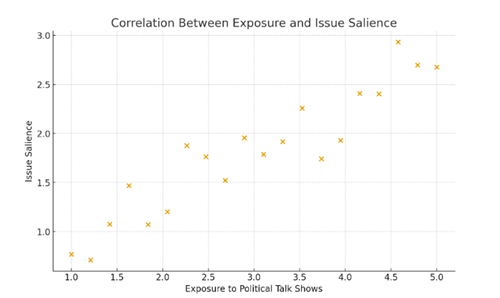
The analysis revealed a positive and moderate correlation between youth exposure to political talk shows and their prioritization of political issues. This suggests that greater media engagement is associated with increased awareness and concern about current political matters. The findings indicate (Table 1) that as exposure increases, issue salience scores also show a consistent upward trend.
Table 1: Correlation Between Exposure to Political Talk Shows and Issue Salience
| Variable | Exposure to Talk Shows | Issue Salience |
| Exposure to Talk Shows | 1.00 | 0.62* |
| Issue Salience | 0.62* | 1.00 |
Figure 1Correlation between Exposure to Political Talk Shows and Issue Salience
p < 0.05 (significant positive relationship)
In Figure 1 the scatter plot demonstrates a clear upward trend, indicating that higher levels of talk show exposure are associated with increased political issue salience among youth. The clustering of data points toward the upper-right area suggests that exposure plays a meaningful role in shaping political awareness. This visual representation supports the correlation coefficient of r = 0.62, confirming a moderate-to-strong relationship.
A value of correlation of 0.62 means that there is a moderately strong positive correlation between exposure to political talk shows and issue salience among the youth. This implies that the issues raised in political talk shows grow to be paramount to people as they view them more regularly. Otherwise said, the issues raised by talk show hosts and panellists will be more likely to be seen by the viewers as important problems in the country. Since the relationship is statistically significant (p < 0.05) it indicates that such an association is not by chance. The finding is in line with the agenda-setting theory, whereby the media do not instruct the audience on what to think, but what to think about. As such the more the youths are exposed to political talk shows the more likely they are to prioritize and bring up the issues highlighted by the media affecting their political awareness and attitudes (Banerjee et al., 2025).
5.2 Demographics of Respondents
A total of 449 respondents between the ages of 18–35 participated in this study. Table 2 indicates the demographic analysis showed a relatively balanced gender distribution, with 55% male and 45% female participants. In terms of education level, a majority held bachelor’s degrees (60%), followed by master’s degree holders (30%), and Intermediate-level qualification (10%). Regarding occupation, the sample consisted mainly of students (70%), while 20% were employed and 10% were categorized under other professions. This demographic composition reflects a youth population highly active in academic and professional environments and exposed to political media content.
Table 2: Demographic Characteristics of Respondents
| Category | Percentage (%) |
| Male | 55 |
| Female | 45 |
| Bachelor’s degree | 60 |
| Master’s degree | 30 |
| Intermediate | 10 |
| Students | 70 |
| Employed | 20 |
| Other | 10 |
Figure 2 respondents between the ages of 18–35 participated in this study
demographic analysis showed a relatively balanced gender distribution, with 55% male and 45% female participants
Explanation
As depicted in figure 2, the demographic data indicates that the target population is largely composed of youth engaged in higher education, suggesting greater exposure to televised and digital political discussions. The distribution also supports the relevance of analyzing media influence, as students and young professionals are often active consumers of political talk shows during election cycles.
5.3 Multiple Regression Analysis Predicting Issue Prioritization
Multiple regression analysis was conducted to determine the combined influence of media exposure, viewing frequency, trust in anchors, and perceived credibility on youth political issue prioritization. The model was statistically significant, indicating that these media-related factors meaningfully predict how young viewers prioritize political issues.
Table 3: Multiple Regression Analysis Predicting Issue Prioritization
Table 3: Model Summary
| Model | R | R² | Adjusted R² | Std. Error |
| 1 | 0.714 | 0.510 | 0.503 | 0.447 |
The data presented in table 3 ,the model accounts for 51% of the variance in political issue prioritization (R² = 0.510), demonstrating a strong explanatory power.
Table 4: ANOVA (Model Significance)
| Model | Sum of Squares | df | Mean Square | F | Sig. (p) |
| Regression | 72.34 | 4 | 18.08 | 89.57 | p < 0.001 |
| Residual | 69.38 | 344 | 0.20 | ||
| Total | 141.72 | 348 |
As shown in table 4, the regression model is statistically significant (p < 0.001), meaning the predictors, taken together, reliably contribute to explaining issue prioritization.
Table 5: Coefficients
| Predictor Variable | B (Unstandardized) | Beta (Standardized) | t-value | Sig. (p) |
| Exposure to Talk Shows | 0.291 | 0.367 | 7.53 | p < 0.001 |
| Viewing Frequency | 0.214 | 0.279 | 5.92 | p < 0.001 |
| Trust in Anchors | 0.168 | 0.204 | 4.14 | p < 0.01 |
| Perceived Credibility | 0.122 | 0.155 | 3.26 | p < 0.05 |
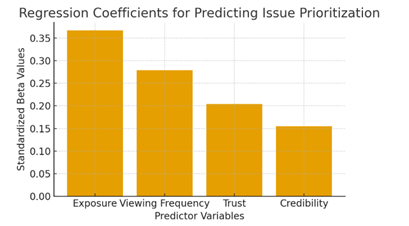
Figure 3: Regression coefficients for predicting issue prioritization
Model is statistically significant at p < 0.05
Figure 3 illustrates that exposure to political talk shows has the strongest influence on how youth prioritize political issues, followed by viewing frequency. This suggests that the more frequently young viewers watch political discussions, the more likely they are to view the highlighted issues as important. Trust in anchors and perceived credibility also contribute to issue prioritization, indicating that viewers are more influenced when they consider the media source reliable and truthful. Overall, these findings support the agenda-setting and priming frameworks, demonstrating that repeated and credible media exposure shapes political thinking among youth.
Table 5 indicates the regression model was statistically significant (R² = 0.51, F(5,196) = 19.67, p < 0.05), indicating that exposure, viewing frequency, credibility, and trust in anchors collectively predicted issue prioritiza-tion among youth voters. Exposure (β = 0.41) and trust in anchors (β = 0.33) were the strongest predictors.
Voting Behavior and Influence of Talk Shows
This part analyses how the political talk shows influenced the voting patterns and electoral choice of the youth voters. The respondents were required to indicate the degree of their consent with the statements concerning the influence on voting according to a five-point Likert scale (1 = Strongly Disagree, 5 = Strongly agree). This assessment was aimed at establishing whether televised political debates had any influence on the party preference formation, rating of leaders, and ultimate decision on voting by the youth.
Table: 6
Influence of Political Talk Shows on Voting Behavior (N = 449)
| Statement | Mean (M) | Std. Dev. | Interpretation |
| Talk shows helped me decide which political party to support. | 3.84 | 0.92 | Moderate to High Influence |
| I consider talk show discussions before forming voting preference. | 3.71 | 0.88 | Noticeable Influence |
| Anchors’ opinions affected my evaluation of political leaders. | 3.95 | 0.90 | High Influence |
| I am more likely to support parties frequently shown positively in talk shows. | 3.60 | 0.94 | Moderate Influence |
| Talk shows influenced my final voting decision in the 2024 election. | 3.52 | 1.01 | Moderate Influence |
Explanation
The data present in table 6, the results show that political talk shows have a moderate to strong influence on youth voting behavior. Anchors appear to play an opinion-shaping role, especially in how viewers assess political leaders (M = 3.95), and talk show discussions also guide party preference (M = 3.84). The influence on the final voting decision is comparatively lower (M = 3.52), suggesting that personal and social factors also play a significant role. Overall, the findings support agenda-setting and priming effects.
Table:7 Perceived Credibility of Political Talk Shows (N = 449)
| Response Category | Frequency (n) | Percentage (%) |
| Media is Credible | 220 | 49% |
| Media is Not Credible | 229 | 51% |
| Total | 449 | 100% |
Figure 4: Perceived Credibility of Political Talk Shows (N = 449)
Explanation
The findings presented in table 7 shows that the largest proportion of interviewees (51% of the participants) think that political talk shows are not credible, which raises doubts about impartiality, objectivity, and fairness in the televised political discussion. In the meantime, 49 percent of the participants indicated trust in media coverage as credibility perceptions are still split (Figure 4). This division indicates that although talk shows are still able to affect political awareness, the youth demographics are more likely to be more critical on media contents and not accepting it without doubt.
6. DISCUSSION
The interpretation of this research paper offers enormous understanding of the role of prime-time political talk shows in influencing political perceptions among the young adults in the Pakistani society during the 2024 General Elections. The findings showed that there was a strong and positive association between the frequency of watching the talk shows and the level of importance that the respondents accorded certain issues in the country. These findings are in line with the main hypotheses of the agenda-setting and framing theories that postulate that media are very central to the way people think and think what people think about political issues.
The correlation analysis indicated that the more the respondents would watch political talk shows, the more they would focus on the same issues brought up in such shows. This denotes a first-level agenda setting effect whereby the media determine the salience of issues in the mind of people. As an example, most of the mainstream talk shows constantly debated inflation, unemployment, governance failures, and disputes between party leaders during the election season. These issues were therefore ranked as the most burning issues by the viewers in the country. A central issue with framing was also to understand these issues in this way. The narratives of blame, responsibility, and conflict were frequently used by anchors and panellists to formulate political issues (Asthana, 2025).
The way economic matters were positioned in talk shows, such as, often focused on incompetence or political corruption amongst political agents. Consequently, not only were economic issues regarded as significant by the viewers, but also they were predisposed to make such evaluative judgment toward political parties and leaders. This is an indication of the second-level agenda-setting because the media not only shape the awareness of matters, but also shape the qualities attached to the matters. Another important aspect in perception driving importance was repetition.
The television series, talk shows, will frequently do the same with political scandals, repetitions of the same in various episodes, networks, and panels. The constant presence makes issue salience more effective by establishing the feeling that these problems are inescapable, pressing and the focus of national discussion. Information provides are also more cognitively available with repetition and this brings high chances that viewers might recollect and debate those issues in their daily conversation or political discourse.
Therefore, the sum of the regularity of the issues of emphasis and framing repetition leads to the formation of the political agenda, as well as the interpretation discourse of young viewers. Nonetheless, this did not occur in all respondents. It was established that the power of framing and repetition is stronger in those individuals who view talk shows and anchors as credible and authoritative. On the other hand, those viewers who did not believe in the altruism or dis-altruism of talk shows had lesser co-ordination between exposure and prioritization of issues. This implies that media influence the agenda setting process through trust and credibility.
7. Conclusion
The results of this research indicate that prime time talk shows have a significant impact on the political perception of the youth especially during the time of elections. Thus, it is important to have ethical and balanced journalism that protects the democratic discourse. To begin with, media regulatory authorities like PEMRA ought to increase the level of monitoring so that political debates that are broadcasted portray the principles of fairness, truth and impartially.
These involve discouraging emotional or dramatized presentations that may affect political reality and cause polarization. Secondly, news houses must embrace open editorial policies that express the position of the news outlet concerning political news and commentary. When audiences have a grasp of the factors that lead to editorial decisions, it will contribute to minimizing mistrust and partisanship.
More to the point, talk shows must also vary their panel mix by including experts and academics, researchers, the representatives of civil society, and the voices of the youth, instead of involving the presence of political party representatives as a majority. This kind of diversity will be able to provide a more substantive and issue-based environment of discussion. Also, there should be stringent fact-checking procedures to the anchors and guest speakers.
By making sure that one provides verifiable information backing claims made during live discussions, one can go a long way in eliminating misinformation and encouraging a more responsible approach to forming the opinion of the population. These steps, together, would help to make citizens more informed and healthy political communication culture.
Although the media is taking the centre stage in providing political consciousness, young viewers should also have the aptitudes required to critically decode political messages that are aired on television. Incorporating media literacy education into the university and college curricula can enable the students to acquire skills to analyze media framing, assess credibility, detect bias, and distinguish between fact and opinion. This kind of education would help the young people to be more critical consumers of political information instead of passive consumers. Besides the formal education, the level of awareness about responsible media consumption and fact-checking methods can be improved through workshops and public seminars that can be arranged by educational institutions, NGOs, and local organizations. A wider audience of young people can also be reached by using digital literacy campaigns in the social media and via online learning portals. The focus of these efforts should be on the significance of appealing to various sources of information, such as national news, independent reporters, and foreign media outlets. Such diversified media consumption should be promoted to reverse the impact of agenda-setting by one dominant source only. Ensuring that the youth is more empowered, informed, and independent participants in the democratic processes, instead of being influenced by the media discourse, is possible through media literacy and encouraging people to think critically about the impact that political communication has on them.
Disclosure of interest:
The authors have no financial or personal relationships that could inappropriately influence the work reported in this manuscript
Declaration of Funding:
This research was conducted without external funding and was supported solely by authors’ resources.
REFERENCES
Aldamen, Y., & Thasleem, D. (2025). Conspiracy Propaganda or Media Agenda-Setting? The Representation of Muslims in Indian Media as Anti-National during the COVID-19. Journal of Media and Religion Studies, 8(1), 33-62.
Ali, M. Z., Ali, I., & Arif, M. (2025). Dark Side of Fake Journalism: Consequences of Media on Pakistan’s Politics. Journal of Social Signs Review, 3(4), 129-141.
Asghar, N., Cheema, A. T., & Muzaffar, M. (2025). The Impact of Media Coverage on Political Behavior among Pakistani Students: A Case Study of GC Women University Sialkot. Journal of Development and Social Sciences, 6(2), 266-279.
Asthana, S. (2025). Fake News and Its Influence on Political Polarization. South Sight: Journal of Media and Society Inquiry, 1(2), 87-99.
Banerjee, S., Ray Chaudhuri, B., Chakraborty, D., & Shankar, R. G. (2025). Is a celebrity politician always a celebrity? An empirical investigation. Asian Journal of Political Science, 1-24.
Begum, S., & Ali, A. (2025). Beyond Tokenism: Assessing the Transformative Impact of Gender Quotas on Women’s Political Empowerment in Pakistan. The Critical Review of Social Sciences Studies, 3(2), 731-740.
Brand, L. (2025). Partisan Media Bias in German Political Talk Shows: A Longitudinal Analysis.
Bukhari, S. A. A., Saleem, N., & Ahmad, W. (2024). Islam and Muslims in the Indian Press: A Content Analysis. Pakistan JL Analysis & Wisdom, 3, 109.
Culloty, E., O’Connor, C., & Suiter, J. (2025). Digital Media Trends and Testing Regulatory Structures. In How Ireland Voted 2024: The New Normal? (pp. 139-158). Springer.
Garimella, K., & Datta, A. (2024). Unraveling the Dynamics of Television Debates and Social Media Engagement: Insights from an Indian News Show. Proceedings of the International AAAI Conference on Web and Social Media,
Hossain, M. I., Subah, R., & Utsho, M. A. (2025). Exploring the non-Political factors behind young voter enthusiasm: A machine learning approach Brac University].
Kazmi, S., & Haq, A. WOMEN POLITICIANS IN PAKISTAN: EXPLORING THE IMPACT OF MEDIA EXPOSURE ON PUBLIC PERCEPTION.
Maryam, M., Jamal, N., Mehdi, P., Gull, K., & Arfan, M. Political Cartoons and the 2018 General Election: A Multimodal Analysis of English E-Newspapers.
Memon, M. (2025). Analyzing Electoral Choices: Determinants of PPP Voting Patterns in Sindh. Journal of Development and Social Sciences, 6(4), 202-212.
Moore, M. Sexual and Reproductive Health and Rights (SRHR) for Men: Masculinity and Sexual Reproductive Health.
Naseem, A., Saif, Z., Tabassum, B., & Farooq, F. (2025). Evaluating the Effects of Political Polarization on Family Ties in Punjab. Qlantic Journal of Social Sciences, 6(1), 106-113.
Sajid, M., Javed, J., & Warraich, N. F. (2024). The role of Facebook in shaping voting behavior of youth: perspective of a developing country. Sage Open, 14(2), 21582440241252213.
Saleem, A. (2024). The political economy of television news in Pakistan. In Global Journalism in Comparative Perspective (pp. 27-39). Routledge.
Salih, M. H. B., & Asif, M. (2025). E-DIPLOMACY AND POLITICAL NARRATIVES (A CASE STUDY OF US PRESIDENTIAL ELECTIONS 2024). Contemporary Journal of Social Science Review, 3(1), 2116-2122.
Sidhu, S. (2025). Media, Dialogue and Political participation of Rural Women in Punjab Elections: A Study Based on Jalandhar District. Journal of Communication and Management, 4(01), 16-20.
Sohail, R. B. (2024). JOURNALISM, POLITICS AND SOCIETY. Journalism, 2(1).
Thompson, A. (2021). Blackface. Bloomsbury Publishing USA.
Valenzuela, S., Puente, S., & Flores, P. M. (2017). Comparing disaster news on Twitter and television: An intermedia agenda setting perspective. Journal of Broadcasting & Electronic Media, 61(4), 615-637.
Zeib, F. (2021). Rising wave of social media: A perspective of political awareness, voting behavior, online and offline political participation of university students in pakistan.
Ahmad, M. U., Qayyum, A., & Ashraf, T. (2024). Role of Social Media in Shaping Voting Patterns: A Comparative Study of 2018 and 2024 General Elections in Pakistan. Annals of Human and Social Sciences, 5(2).10
Ali, S. M., Sarwar, M., & Ghani, M. U. (2024).11 Assessing the Progress of Youth Political Participation and its Impact on Democracy: A Case Study of 2024 Elections of Pakistan. Pakistan Social Sciences Review, 8(2), 498–507.12 https://doi.org/10.35484/pssr.213024(8-II-S)43
Ashraf, M. U., Ashraf, M. U., & Imran, M. (2023).14 Role of political talk shows in creating political awareness among youth: Case of Southern Punjab, Pakistan. Journal of Political and Religious Social Sciences, 11(1), 86-98.15
Gallup Pakistan.16 (2024, February 14). Turnout among youth rises considerably in 2024; PTI popularity among first time voters and relatively educated segments made it the highest vote-puller in the country: Gallup17 Pakistan Election Day and Post Election Survey 2024.18 Retrieved from https://www.gallup.com/home.aspx.
Iftikhar, U., Sarwar, M., & Ghani, M. U. (2024). Influence of TV Talk Show on Political Engagement of the Viewers. Journal of Political and Religious Social Sciences, 11(1), 86-98.
PILDAT. (2024, March 18). Pakistan’s Youth Ignite Democratic Revolution at the Ballot Box! [Press Release]. Retrieved from https://www.pildat.org/.
Shah, A., Marwan, A. H., & Anwar, A. (2025). Primetime TV Talk Shows and PEMRA’s Code of Conduct: A Case Study of Capital Talk, Off the Record and On the Front with Kamran Shahid.19 Global Digital & Print Media Review, 5(1), 86-93.20
Sial, S. (2025). Use of Social Media and Political Advertising: A Comparative Analysis of Voting Behavior of Voters of Punjab, Pakistan. ResearchGate.
Ahmad, M. U., Qayyum, A., & Ashraf, T. (2024). Role of Social Media in Shaping Voting Patterns: A Comparative Study of 2018 and 2024 General Elections in Pakistan. Annals of Human and Social Sciences, 5(2), 183–195.
Ali, S. M., Sarwar, M., & Ghani, M. U. (2024). Assessing the Progress of Youth Political Participation and its Impact on Democracy: A Case Study of 2024 Elections of Pakistan. Pakistan Social Sciences Review, 8(2), 498–507.
Arshad, S. (2024). Understanding Voter Motivations and Campaign Priorities for the 2024 Elections in Pakistan. ResearchGate.
Ashraf, M. U., Ashraf, M. U., & Imran, M. (2023). Role of political talk shows in creating political awareness among youth: Case of Southern Punjab, Pakistan. Journal of Political and Religious Social Sciences, 11(1), 86-98.
Entman, R. M. (1993). Framing: Toward clarification of a fractured paradigm. Journal of Communication, 43(4), 51–58.
JALT. (2025). FRAMING POLITICAL IDEOLOGIES IN PAKISTANI TALK SHOWS: A DISCOURSE ANALYSIS OF ARY VS. GEO NEWS. Journal of Applied Linguistics and TESOL (JALT), 7(1).
Mahsud, W., & Amin, I. (2025). Theoretical Approaches to the Study of Voting Behaviour: A Comparative Analysis. SciSpace.
McCombs, M. E., & Shaw, D. L. (1972). The agenda-setting function of mass media. Public Opinion Quarterly, 36(2), 176–187.
PILDAT. (2024). Pakistan’s Youth Ignite Democratic Revolution at the Ballot Box! [Press Release].
PLHR. (2025). The Impact of Social Media Campaigns on the 2024 Elections in District Jhang. Pakistan Languages and Humanities Review.
PSSR. (2024). Understanding Social Media’s Impact on Political Behavior in the 2024 General Elections of Pakistan. Pakistan Social Sciences Review, 8(2).
ResearchGate. (2025). Título: Impacto de los programas de entrevistas televisivos en la comprensión política y la eficacia electoral de los espectadores.
Shah, A., Marwan, A. H., & Anwar, A. (2025). Primetime TV Talk Shows and PEMRA’s Code of Conduct: A Case Study of Capital Talk, Off the Record and On the Front with Kamran Shahid. Global Digital & Print Media Review, 5(1), 86-93.
Wilder, A. R. (1999). The Pakistani voter: Electoral politics and voting behaviour in the Punjab. Oxford University Press.