DOI:https://doi-0004.org/6812/17899151885013
Bouabdelli Boulanouar Fathi
Abstract
This study aimed to measure the degree of adapted physical and sports activity practice and its role in raising morale among children with motor disabilities at the Psycho-Pedagogical Centre for Children with Motor Disabilities in the Province of Djelfa, by means of a questionnaire distributed to 35 respondents, and using the descriptive-analytical method and statistical analyses. The study reached the following set of results: the degree of adapted physical and sports activity practice and the level of morale, from the perspective of the children with motor disabilities, were at a moderate level; there is also a statistically significant effect, at the significance level (α ≤ 0.05), of adapted physical and sports activity practice on the morale of children with motor disabilities.
Keywords: adapted physical and sports activity, morale, motor disability.
Introduction
Adapted physical and sports activity is one of the fundamental factors that contribute significantly to improving the quality of life of individuals with motor disabilities, not only from the physical standpoint but also from the psychological one. Adapted sport, which is specifically designed to meet the needs of individuals with disabilities, is considered an effective means of promoting general improvement in their psychological and morale states. Within the framework of continuous interaction with dedicated physical activities, individuals are exposed to positive experiences that contribute to strengthening self-confidence, reducing levels of anxiety and stress, and improving mood in general.
The practice of adapted sports activity contributes to improving morale among persons with motor disabilities. Physical activity strengthens the sense of achievement and personal fulfilment, which is reflected positively in the level of self-confidence and self-esteem. Likewise, the social interaction that arises from participation in group sports activities helps to build strong social relationships, which contributes to alleviating the feelings of loneliness and isolation from which some may suffer.
Adapted sport can also lead to an improvement in the level of physical activity, which in turn is linked to an improvement in psychological state. This effect combines physical progress with psychological development, creating an integrated experience that enhances quality of life in general. Therefore, understanding the effect of adapted physical and sports activity on the morale of persons with motor disabilities represents an important step towards promoting and developing strategies to support and improve the lives of these individuals, thereby contributing to building a more inclusive and understanding society.
In light of the above, the following research problem can be posed:
To what extent can the practice of adapted physical and sports activity contribute to raising morale among children with motor disabilities?
The following sub-questions emerge from the main research problem:
- What is the degree of adapted physical and sports activity practice from the perspective of children with motor disabilities?
- What is the level of morale among persons with motor disabilities from their own perspective?
- Does the practice of adapted physical and sports activity affect the level of morale among children with motor disabilities?
In order to answer this research problem, we propose the following hypotheses:
- The degree of adapted physical and sports activity practice, from the perspective of children with motor disabilities, is low.
- The level of morale among persons with motor disabilities, from their own perspective, is low.
- There is no statistically significant effect, at the significance level (α ≤ 0.05), of adapted physical and sports activity practice on the morale of children with motor disabilities.
- There is no statistically significant effect, at the significance level (α ≤ 0.05), of the combined dimensions of adapted physical and sports activity practice on the morale of children with motor disabilities.
Significance of the Study
The study of the effect of adapted physical and sports activity practice on raising morale among persons with motor disabilities is of great importance for several reasons:
- The study offers practical insights into how the quality of life of these individuals can be improved by enhancing their psychological state, which can lead to a reduction in depression and anxiety and an increase in the sense of achievement and self-confidence.
- The study contributes to the development of dedicated sports programmes aligned with their special needs, which promotes general well-being and encourages active participation in physical activities.
- The study provides scientific evidence to support policies and practices that promote inclusion and integrate individuals with disabilities more deeply into society, thereby contributing to building a more cohesive and understanding society.
I. Definition of the Study Terms
1. Adapted physical and sports activity:
It is defined as “the sports, games and programmes that are modified to suit disability conditions according to their type and severity; this is done in accordance with the interests of persons who are not able-bodied and within the limits of their abilities” (Ibrahim & Farhat, 1998, p. 223).
It also refers to “all the movements, exercises and all the sports practised by persons whose abilities are limited in physical, psychological or mental terms, owing to damage to or injury of some of the major bodily functions” (Astor et al., 1993, p. 10).
The researcher defines it operationally as a type of physical activity that is designed and modified to suit the needs and abilities of individuals or special groups, such as persons with disabilities or the elderly. This type of activity aims to improve physical condition and health in ways that suit the particular limitations or requirements of each individual.
2. Motor disability:
A person with a motor disability is defined as “a person who suffers, permanently or chronically, from an impairment at the level of movement, which leads to a limitation of his activities and behaviours. The subject of motor disability encompasses several types; persons with motor disabilities are individuals affected in the locomotor system who suffer as a result of functional impairment, and motor disability also varies according to its types, or what is called a ‘fine’ injury, such as paralysis or poor control of ordinary movements” (Ghareeb, 1995, p. 44).
The researcher defines it operationally as the condition that limits an individual’s ability to move naturally; it may be the result of problems in the nervous system, the muscles or the bones, thereby affecting the ability to walk or to use the limbs fully.
3. Morale:
Morale is defined as “an individual matter that describes the individual’s feelings towards his work and the extent of his satisfaction with this work” (Al-Shanawani, 2003, p. 137). It is “the sum of the feelings, emotions and attitudes of its members, centred on the degree of their satisfaction, conviction and pleasure in the work and the system” (Al-Taweel, 2006, p. 68).
It is “a state of mind determined by the positive psychological feelings that the individual holds towards his work and the way this work is managed and carried out correctly; morale may also involve a negative feeling and frustration and may push towards a tendency to criticise others and towards pessimism” (Young, 2006, p. 85).
The researcher defines it operationally as a state of mind that describes the individual’s feelings towards his ability to cope with the challenges of motor disability and his satisfaction with his daily performance and the activities he carries out. Morale reflects the extent of the individual’s satisfaction with his achievements and the interaction of his positive or negative psychological feelings with the situation in which he lives, which affects his orientations and his sense of positivity or frustration.
II. The Field Study
1. Study model: A model for the study was designed according to the axes it adopts: the first axis, which represents the independent variable (adapted physical and sports activity practice), and the second axis, which represents the dependent variable (morale). The following figure illustrates this:
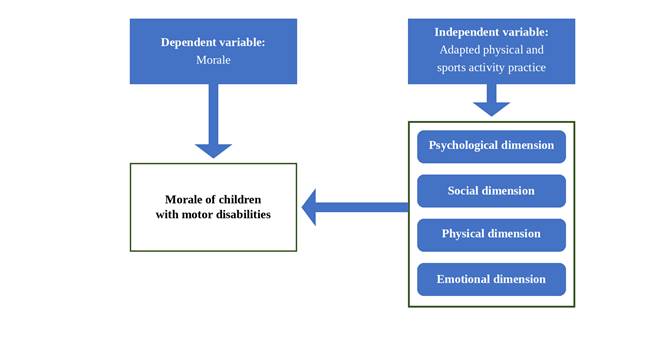
Figure 1. Study model, prepared by the researcher on the basis of previous studies
2. Research method: In order to answer the research problem posed and test the validity of the hypotheses, we followed the descriptive-analytical method. We also carried out a case study by designing a questionnaire to collect and analyse the various data, with the help of the Statistical Package for the Social Sciences (SPSS 24).
3. Population and sample: We selected a sample of persons with motor disabilities at the Psycho-Pedagogical Centre for Children with Motor Disabilities in the Province of Djelfa, using the purposive random method. Thirty-five (35) paper questionnaires were distributed; all questionnaires were answered and fully retrieved.
4. Statistical methods used in the study: In analysing the study data we used several concepts related to descriptive and inferential statistics, which can be listed as follows:
a. Descriptive statistical measures, specifically the arithmetic mean and the standard deviation, in order to clarify the respondents’ orientations towards the dimensions and axes of the study.
b. Cronbach’s alpha coefficient (α), in order to estimate the reliability of the study.
c. Normality test, in order to verify whether the data follow the normal distribution.
d. Simple linear regression analysis, in order to determine the effect of the independent variable on the dependent variable.
e. Multiple linear regression analysis, in order to determine which of the independent variables have the greatest influence on the dependent variable.
5. Design of the study instrument: In our research we relied on the questionnaire as an instrument for collecting primary data, using a five-point Likert scale. In order to achieve the objectives of the study and to identify the effect of adapted physical and sports activity practice on the morale of persons with motor disabilities, we designed a questionnaire comprising three sections, as follows:
Table 1. Divisions of the questionnaire and number of items for each dimension
| Section | Axis (variable) | Dimensions | Item numbers |
| First | Personal variables (gender, age group) | / | / |
| Second | Adapted physical and sports activity practice | Psychological dimension | Items 1 to 4 |
| Social dimension | Items 5 to 8 | ||
| Physical dimension | Items 9 to 12 | ||
| Emotional dimension | Items 13 to 16 | ||
| Third | Morale | Morale | Items 1 to 10 |
The dimensions address indicators capable of measuring the dimension to which they belong, as follows:
- Psychological dimension: addresses indicators related to improvement in mood, strengthening of self-confidence, control of stress and anxiety, and the sense of achievement.
- Social dimension: addresses indicators related to social interaction and community integration.
- Physical dimension: addresses indicators related to improvement in physical fitness and improvement in mobility (movement).
- Emotional dimension: addresses indicators related to feelings of happiness and satisfaction, and coping with frustration.
6. Weighting scale: The Likert scale most often consists of five basic ordered levels to be answered; in some cases other levels ranging from 7 to 9 may be used (Touiti & Ouail, 2014, p. 51).
Table 2. Weights of the Likert scale with the available response options and the weighted mean
| Response options | Weight | Weighted mean |
| Always | 5 | (4.20–5) |
| Often | 4 | (3.40–4.19) |
| Sometimes | 3 | (2.60–3.39) |
| Rarely | 2 | (1.80–2.59) |
| Never | 1 | (1–1.79) |
Source: prepared by the researcher on the basis of previous studies
To determine the level of each variable or indicator, a scale known as the three-level scale is used, comprising three levels — high, moderate and low — as shown in the following table:
Table 3. Weighted means and their corresponding levels
| Weighted mean | Level |
| (1–2.33) | Low |
| (2.34–3.67) | Moderate |
| (3.68–5) | High |
Source: prepared by the researcher on the basis of previous studies
7. Normality test for the study axes:
Table 4. Results of the normality test for the study axes
| Axis | K–S statistic | K–S Sig. | S–W statistic | S–W Sig. |
| Adapted physical and sports activity practice | 0.083 | 0.183 | 0.954 | 0.077 |
| Morale | 0.045 | 0.346 | 0.894 | 0.563 |
| Study as a whole | 0.061 | 0.281 | 0.895 | 0.714 |
Note. K–S = Kolmogorov–Smirnov test; S–W = Shapiro–Wilk test. Source: prepared by the researcher on the basis of SPSS outputs
We observe from Table 4 that the data follow the normal distribution, based on the significance values, all of which were greater than 0.05; the results were 0.077, 0.563 and 0.714 for the two study axes and the study as a whole, respectively.
8. Reliability of the study instrument:
Table 5. Cronbach’s alpha coefficients for the study axes
| Study axes | Number of items | Cronbach’s alpha coefficient |
| Psychological dimension | 04 | 0.851 |
| Social dimension | 04 | 0.943 |
| Physical dimension | 04 | 0.811 |
| Emotional dimension | 04 | 0.751 |
| Adapted physical and sports activity practice | 16 | 0.917 |
| Morale | 10 | 0.907 |
| Study as a whole | 26 | 0.931 |
Source: prepared by the researcher on the basis of SPSS outputs
We observe from Table 5 that the overall reliability coefficient of the study equals 0.931, an excellent value that reflects the strength and reliability of the study. As for the dependent variable (morale), its reliability coefficient was 0.907, which is also an excellent value. As for the independent variable (adapted physical and sports activity practice), its reliability coefficient was estimated at 0.917, meaning that it is an axis characterised by high reliability.
9. Measuring the respondents’ orientations towards the study axes:
Table 6. Ranking of the respondents’ answers by arithmetic means, standard deviations and relative importance
| Axis | Rank | Dimension | Mean | SD | Level |
| Independent variable | 01 | Social dimension | 3.98 | 0.352 | High |
| 02 | Emotional dimension | 2.81 | 0.967 | Moderate | |
| 03 | Psychological dimension | 2.77 | 0.744 | Moderate | |
| 04 | Physical dimension | 2.64 | 0.884 | Moderate | |
| / | Adapted physical and sports activity practice | 3.05 | 0.897 | Moderate | |
| Dependent variable | / | Morale | 3.01 | 0.621 | Moderate |
Source: prepared by the researcher on the basis of SPSS outputs
From Table 6 we observe the following:
- The second axis, which represents the dependent variable (morale), came at a moderate level of importance for the respondents, as shown by the arithmetic mean estimated at 3.01 with a standard deviation of 0.621.
- The first axis, which represents the independent variable (adapted physical and sports activity practice), came at a moderate level of importance for the respondents, as shown by the arithmetic mean estimated at 3.05 with a standard deviation of 0.897. The dimensions of this axis were ranked in terms of importance for the respondents as follows:
- In first place was the social dimension, with an arithmetic mean of 3.98, a high level of importance for the respondents in this study, and a standard deviation of 0.352.
- In second place was the emotional dimension, with an arithmetic mean of 2.81, a moderate level of importance for the respondents in this study, and a standard deviation of 0.967.
- In third place was the psychological dimension, with an arithmetic mean of 2.77, a moderate level of importance for the respondents in this study, and a standard deviation of 0.744.
- In fourth place was the physical dimension, with an arithmetic mean of 2.64, a moderate level of importance for the respondents in this study, and a standard deviation of 0.884.
On the basis of these results:
- We reject the null hypothesis, which states that: the degree of adapted physical and sports activity practice, from the perspective of children with motor disabilities, is low.
- We accept the alternative hypothesis, which states that: the degree of adapted physical and sports activity practice, from the perspective of children with motor disabilities, is moderate.
- We reject the null hypothesis, which states that: the level of morale among children with motor disabilities, from their own perspective, is low.
- We accept the alternative hypothesis, which states that: the level of morale among children with motor disabilities, from their own perspective, is moderate.
10. Testing the first effect hypothesis:
Table 7. Results of the regression analysis of variance to verify the validity of the model for testing the effect of adapted physical and sports activity practice on morale
| Source of variation | df | Sum of squares | Mean square | F value | R² | Sig. (F) |
| Regression | 1 | 13.424 | 13.424 | 62.311 | 0.656 | 0.000 |
| Error | 33 | 7.110 | 0.215 | |||
| Total | 34 | 20.534 |
Source: prepared by the researcher on the basis of SPSS outputs
From the results of Table 7, the validity of the model for predicting the relationship between adapted physical and sports activity practice and morale is apparent, based on the F value estimated at 62.311 and the significance level estimated at 0.000, which is below the assumed significance level of 0.05.
Table 8. Results of the simple regression analysis for testing the effect of adapted physical and sports activity practice on morale
| Dependent variable | Independent variable | Correlation coefficient (R) | Coefficient of determination (R²) | Regression coefficient | Constant |
| Morale | Adapted physical and sports activity practice | 0.809 | 0.656 | 0.553 | 1.861 |
Regression equation: Y = 1.861 + 0.553 X1. Source: prepared by the researcher on the basis of SPSS outputs
From Table 8 we observe that the value of the correlation coefficient R is 0.809, which indicates the existence of a strong correlational relationship between adapted physical and sports activity practice and morale. The value of the coefficient of determination R² is estimated at 0.656, meaning that adapted physical and sports activity practice explains 65.6% of the variance occurring in morale among children with motor disabilities.
On the basis of this result:
- We reject the null hypothesis, which states that: there is no statistically significant effect, at the significance level (α ≤ 0.05), of adapted physical and sports activity practice on the morale of children with motor disabilities.
- We accept the alternative hypothesis, which states that: there is a statistically significant effect, at the significance level (α ≤ 0.05), of adapted physical and sports activity practice on the morale of children with motor disabilities.
11. Testing the second effect hypothesis:
Table 9. Results of the regression analysis of variance to verify the validity of the model for testing the effect of the combined dimensions of adapted physical and sports activity practice on morale
| Source of variation | df | Sum of squares | Mean square | F value | R² | Sig. (F) |
| Regression | 1 | 15.423 | 3.856 | 22.630 | 0.751 | 0.000 |
| Error | 33 | 5.111 | 0.170 | |||
| Total | 34 | 20.534 |
Source: prepared by the researcher on the basis of SPSS outputs
From the results of Table 9, the validity of the model for predicting the relationship between the combined dimensions of adapted physical and sports activity practice and morale is apparent, based on the F value estimated at 22.630 and the significance level estimated at 0.000, which is below the assumed significance level of 0.05.
Table 10. Multiple regression of the effect of the combined dimensions of adapted physical and sports activity practice on morale
| Independent variable | β | Correlation (R) | Calculated T | R² | Sig. (T) | Effect |
| Psychological dimension | 0.227 | 0.867 | 1.474 | 0.751 | 0.151 | No effect |
| Social dimension | 0.492 | 2.617 | 0.014 | Effect | ||
| Physical dimension | −0.069 | −0.351 | 0.728 | No effect | ||
| Emotional dimension | 0.347 | 2.993 | 0.005 | Effect |
* Statistically significant at the significance level (α = 0.05). Tabulated T value at the 0.05 significance level and 35 degrees of freedom = 1.68. Source: prepared by the researcher on the basis of SPSS outputs
It is clear from Table 10 that the T values for the two dimensions (social and emotional) were estimated at (2.617 and 2.993) respectively, all of which are greater than the tabulated value (1.96). In addition, the significance level reached (0.000) for the same two dimensions, which is below the assumed significance level (α ≤ 0.05). This means that there is a statistically significant effect, at the significance level (α ≤ 0.05), of the dimensions of adapted physical and sports activity practice (social and emotional), each independently at the same time, on the morale of children with motor disabilities. The value of R, which reached (0.867), also indicates a positive relationship between the dimensions of adapted physical and sports activity practice, taken independently, and morale, and the value of R² indicates that these dimensions together explain (75%) of the variance in the dependent variable, which is an excellent explanatory power. As for the two dimensions (psychological and physical), they have no effect according to the regression model, as their significance levels were (0.151 and 0.728) respectively.
On the basis of the above:
- We reject the null hypothesis, which states that: there is no statistically significant effect, at the significance level (α ≤ 0.05), of the combined dimensions of adapted physical and sports activity practice on the morale of children with motor disabilities.
- We accept the alternative hypothesis, which states that: there is a statistically significant effect, at the significance level (α ≤ 0.05), of the combined dimensions of adapted physical and sports activity practice on the morale of children with motor disabilities.
Conclusion
At the close of this study on adapted physical and sports activity practice and its role in raising morale among children with motor disabilities, it is clear that sport constitutes an effective tool for promoting the psychological and physical health of this group. Studies have shown that adapted sports activities are not merely a means of improving physical fitness; they contribute directly to improving mood and morale. Children with motor disabilities find in sports activity an opportunity for social interaction, a sense of achievement and the development of self-confidence. These activities also help to reduce social isolation and strengthen their sense of integration into society. It can therefore be said that adapted sport represents a vital element in improving the quality of life of children with motor disabilities, which calls for the need to raise awareness of its importance and to provide suitable opportunities to practise it in safe and supportive environments.
Study Results
- The degree of adapted physical and sports activity practice, from the perspective of children with motor disabilities, is moderate.
- The level of morale among children with motor disabilities, from their own perspective, is moderate.
- There is a statistically significant effect, at the significance level (α ≤ 0.05), of adapted physical and sports activity practice on the morale of children with motor disabilities.
- There is a statistically significant effect, at the significance level (α ≤ 0.05), of the combined dimensions of adapted physical and sports activity practice on the morale of children with motor disabilities.
Recommendations
In light of the preceding results, we formulate the following recommendations:
1. Developing innovative sports programmes targeting this group, with a focus on providing the appropriate environment and the tools that help them to participate effectively.
2. Concentrating efforts on providing greater psychological and social support during sports activities, with the aim of raising their morale and strengthening their sense of achievement and self-confidence.
3. Integrating adapted sports activities into the educational curricula and recreational programmes for children with motor disabilities in schools and specialised centres.
4. Diversifying the sports activities offered to encompass multiple dimensions of physical and mental skills, so as to contribute to achieving comprehensive positive effects on the children’s psychological state.
5. Qualifying and training coaches and teachers specialised in working with children with motor disabilities to develop adapted sports activities and to ensure that the necessary psychological and social support is provided to them.
6. Raising families’ awareness of the importance of adapted sports activities and encouraging them to support their children with motor disabilities in participating in these activities, thereby contributing to improving their morale and strengthening their social integration.
References
Al-Shanawani, S. (2003). Idarat al-afrad wa al-‘alaqat al-insaniyya: Madkhal al-ahdaf [Personnel management and human relations: An objectives approach]. Alexandria, Egypt: Mu’assasat Shabab al-Jami‘a.
Al-Taweel, H. (2006). Al-idara al-haditha: Mafahim wa afaq [Modern management: Concepts and horizons] (1st ed.). Amman, Jordan: Dar Wael for Publishing and Distribution.
Astor, U. C. L., et al. (1993). Activités physiques et sportives adaptées pour personnes handicapées mentales [Adapted physical and sports activities for persons with intellectual disabilities]. Belgium: Print Marketing SPRL.
Ghareeb, S. A. (1995). Al-suluk al-ijtima‘i lil-mu‘awwaqin [The social behaviour of persons with disabilities]. Egypt: Dar al-Ma‘rifa al-Jami‘iyya.
Ibrahim, H., & Farhat, L. S. (1998). Al-tarbiya al-riyadiyya wa al-tarwih lil-mu‘aqin [Physical education and recreation for persons with disabilities] (1st ed.). Cairo, Egypt: Dar al-Fikr al-Arabi.
Touiti, M., & Ouail, M. (2014). Asalib tasmim wa i‘dad al-dirasat al-maydaniyya: Manzur ihsa’i [Methods of designing and preparing field studies: A statistical perspective] [Course handout, academic year 2013/2014]. Bouira, Algeria: University of Bouira.
Young, J. (2006). Teachers’ morale and efficacy of teaching. Conference paper submitted to the Teachers Annual Conference, Australia.