DOI:https://doi-0004.org/6812/17912951303200
Dr. Malika Ghodbane1
1University of Mila, Algeria, E-mail: m.ghodbane@centre-univ-mila.dz
Received: 09.02.2026 Accepted: 25.06.2026 Published: 06.08.2026
ABSTRACT
This research paper aims to highlight the effect of exchange rate fluctuations on the Algerian trade balance between 2000 and 2019.
Through analysing the study variables, an inverse relationship was found between the trend of exchange rate changes and the change in the trade balance.
The study also examined the impact of the 2008 financial crisis and the subsequent health crisis caused by the SARS-CoV-2 virus on exchange rate fluctuations and the trade balance.
Keywords: exchange rate, Algerian trade balance, oil prices.
Introduction
Algeria has experienced many problems with its trade balance due to several factors, the most important of which include declining economic growth rates, rising interest rates in international markets and exchange rate volatility. These factors have prevented a surplus in the balance of payments from occurring.
In the context of globalisation, Algeria has implemented numerous economic reforms to improve performance and achieve internal and external balances relating to imports and exports.
Therefore, it is necessary to pay close attention to exchange rate developments. As Algeria relies on two currencies — the US dollar for oil exports and the euro for imports — any fluctuation in the price of these currencies will inevitably affect the Algerian economy and the trade balance.
Statement of the problem (research question)
Based on the foregoing, the following research problem can be formulated:
To what extent do fluctuations in the Algerian dinar exchange rate affect the country’s trade balance?
This main question is broken down into the following sub-questions:
- What is the concept of the exchange rate?
- What are the components of the trade balance, and how are its various imbalances addressed?
- How does the exchange rate of the Algerian dinar affect the trade balance?
Research hypotheses
To answer the above questions, the following hypotheses are proposed:
- The exchange rate is an effective mechanism for addressing imbalances in the trade balance.
- A devaluation of the Algerian dinar leads to a reduction in the trade balance deficit.
Importance of the study
This study aims to determine the effect of exchange rate fluctuations on Algeria’s trade balance, while also highlighting Algeria’s exchange rate policies and presenting its trade balance figures for the period 2010–2019.
Methodology
This study takes an analytical descriptive approach to understand the theoretical aspects related to the exchange rate and the balance of payments, and to clarify the impact of the Algerian dinar exchange rate on balance of payments.
Previous studies
1. Abdeldjalil Hedjira and Samir Bahaaeddine Mekki (2012), titled: ‘The Effect of Exchange Rate Changes on the Algerian Trade Balance’. Published in Les Cahiers du MECAS, University of Abu Bakr Belkaid, Tlemcen, Issue 8.
The authors examined the impact of exchange rate movements on the Algerian trade balance, taking into account the structure of the Algerian economy — most of its exports are oil-based and denominated in U.S. dollars, while imports are largely denominated in euros. The study concluded that there is a long-term relationship between changes in the exchange rates of the euro and the US dollar and the balance of the Algerian trade balance.
2. Belkacem Rahali (2019), titled: ‘The Trade Balance and Exchange Rate Fluctuations in Algeria: An Analytical Econometric Study for the Period (2000–2017).
This study highlighted the effect of fluctuations in the exchange rates of both the euro and the US dollar against the Algerian dinar on the Algerian trade balance, and clarified the relationship between the two. The analysis relied on quarterly data covering the period from 2000 to 2017. The researcher developed an econometric model using a cointegration test, estimated an autoregressive distributed lag (ARDL) model and analysed impulse responses.
The study emphasised the significant role of oil prices in determining the level of exports. It found no long-term cointegration among the study variables and showed that any shock affecting exchange rate changes has a direct, short-term effect on changes in the Algerian trade balance.
The study is organised into three sections, each covering the following:
– The theoretical framework of the exchange rate and the trade balance, including:
– The evolution of the Algerian dinar exchange rate against the US dollar between 2000 and 2019.
– The evolution of the Algerian trade balance over the same period.
Axis One: The theoretical framework of the exchange rate and the trade balance
In this section, the study presents the concepts related to the exchange rate and the trade balance, as well as their relationship.
First: Exchange rate
1. The concept of the exchange rate
The exchange rate reflects the number of units of a foreign currency that can be obtained by converting one unit of the domestic currency[1].
It can be defined as the price of one currency in terms of another, or as the rate at which two currencies are exchanged: one is considered the ‘commodity’, while the other is considered its ‘price’[2]. It can also be defined as the rate at which a country’s currency is exchanged for those of other countries.
In practice, there are two methods for quoting currencies:
– direct quotation
– Indirect quotation
Direct quotation: This is the number of units of foreign currency that must be paid to obtain one unit of the national currency. Few countries use this method, including the United Kingdom.
Indirect quotation: This is the number of units of the national currency that must be paid to obtain one unit of the foreign currency. Most countries use this method, including Algeria[3].
2. Types of Exchange Rate
There are several forms of exchange rate:
2.1 Nominal exchange rate (NER): The nominal exchange rate measures the value of a country’s currency. It is determined by the supply and demand for the currency in the foreign exchange market at a given point in time[4].
The nominal exchange rate is divided into:
– Official exchange rate: the rate applied to official current transactions.
– Parallel exchange rate: the rate applied in parallel (unofficial) markets.
Therefore, it is possible for more than one nominal exchange rate to exist at the same time for the same currency within the same country.
2.2 Real exchange rate[5]
The real exchange rate expresses the number of units of domestic goods required to purchase one unit of foreign goods. It therefore serves as an indicator of the competitiveness of national products.
There is an inverse relationship between a country’s competitive capacity and the level of its real exchange rate. In other words, as the real exchange rate increases, the number of domestic goods needed to purchase one unit of foreign goods decreases, and vice versa.
Thus, the real exchange rate is essentially the nominal exchange rate adjusted by indicators of relative price changes. The closer the real exchange rate is to the nominal exchange rate, the lower the inflation rate.
Adjusting the nominal exchange rate by inflation rates provides a more accurate indicator of the purchasing power of exchange rates, i.e. the actual quantity of foreign goods and services that can be purchased with one unit of domestic currency.
The real exchange rate is determined as follows: [6]

Where:
– ER: Real exchange rate
– E: Nominal exchange rate in terms of the foreign currency
– P: Price of the product in domestic currency
– P*: Price of the foreign product in foreign currency
2.3 Effective exchange rate
The effective exchange rate reflects an index that measures the average change in the exchange rate of a given currency against several other currencies over a specific time period. In this sense, the effective exchange rate is the average of bilateral exchange rates, indicating the extent to which a country’s currency has improved or developed relative to a group of other currencies. It can be measured using the Laspeyres index for standardised quantities.
It can be calculated using the following equation:


INERPR
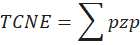
Where:
– INERPR: Effective real exchange rate index (as specified by the model).
– w_i: The weight of currency i (if included in your chosen formulation).
– INERP: Nominal bilateral exchange rate price index in the measurement year compared with the base year.
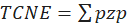
More specifically, INERP is calculated as follows:
Where:
– epr: The exchange rate of currency p in local currency in the measurement year
– (epr): The exchange rate of currency p in the local currency in the base year.
The following variables are used:
X: the value of exports to country p in the base year, denominated in its currency.
Zp: the share of country r, denominated in that country’s currency.
It is therefore necessary to determine the objective of measuring this indicator: does it show the effect of exchange rate changes on exports or imports? This is explained as follows:[7]
A. Effective exchange rate for exports (EERX)
The effective exchange rate for exports (EERX) is the number of units of the domestic currency that can be obtained in exchange for one U.S. dollar’s worth of exports, taking into account:
– export taxes;
– financial subsidies;
– additional fees;
– the exchange rates of the production factors included in exports.
B. Effective exchange rate for imports (EERM): The effective exchange rate for imports (EERM) is the number of units of the domestic currency paid for a value of one U.S. dollar of imports, taking into account:
– customs duties;
– additional fees;
– interest on import deposits;
– other measures that affect import prices.
Export–import profitability ratio
Measuring the ratio of the change in the effective exchange rate for exports to that for imports allows comparison of changes in all exportable items and all items required for imports. In other words, the indicator reflects the profitability of exports and imports. It can be interpreted as follows:[8]
– If EERX/EERM > 1, this indicates a bias against exports (i.e. imports are increasing excessively).
– If EERX/EERM < 1: this indicates an increase in the export share.
Real International Exchange Rate (REER)
The real international exchange rate (REER) measures how the exchange rate of a given country changes relative to its trading partners compared to a specific base period. It is an index-adjusted measure of the nominal effective exchange rate in light of movements in relative prices[9].
Exchange rate at equilibrium (equilibrium exchange rate): the equilibrium exchange rate is defined as the relative price of tradable goods compared with non-tradable goods, resulting in the achievement of both:
– internal equilibrium,
– and external equilibrium[10].
Second: the trade balance
1. The concept of the trade balance
The trade balance represents the net value of a country’s imports and exports. Since export prices are expressed in domestic currency and import prices in foreign currency[11], the trade balance is the difference between the value of exports and imports of goods over a period of time, usually three months. Thus, it reflects the relationship between a country’s exports and imports, and is expressed by the following equation:
Trade balance = total exports of the country (X) – total imports (M). (M).
The trade balance is considered a fundamental component of the balance of payments because it reflects a country’s productive activity and structure. When a country experiences a deficit in its productive activity due to weak diversification, insufficient productive capacity or limited flexibility in meeting the needs of the economy, it resorts to imports in order to cover those needs.
Furthermore, a country’s inability to expand and diversify its productive activity prevents it from generating a surplus that could support and encourage exports. This, in turn, leads to a deficit in its trade balance[12].
2. Trade Balance Sections
The trade balance consists of two main sections:
2.1 Merchandise (goods) trade balance
This is the difference between the quantities of goods exported and imported. It is also referred to as visible transactions (i.e. the account of visible trade). It includes all economic transactions involving the exchange of tangible goods between residents and non-residents during a given period. These flows are linked to differences in economic activity between the country and the rest of the world.
2.2 Services trade balance: this represents the difference in value between services exported and imported, and is also known as invisible transactions. It includes all credit and debit economic transactions in the form of services exchanged between residents and non-residents during a given period. These transactions are related to production and income over the same period.
The services trade balance is affected by the relative prices of products. An increase in domestic prices leads to higher export prices, which improves the services trade balance. However, depreciation of the external value of the currency in the short run raises import prices and worsens the services balance. In the long run, however, it improves the competitiveness of domestic products[13].
Axis Two: Evolution of the Exchange Rate of the Algerian Dinar Against the U.S. Dollar (2000–2019).
The 1986 oil crisis led to deficits in the general budget and balance of payments, resulting in economic stagnation. This made it necessary to implement major, radical reforms across various sectors of the national economy.
The following table shows the evolution of the Algerian dinar exchange rate against the U.S. dollar between 2000 and 2019.
Table 1: Evolution of the Algerian dinar exchange rate against the U.S. dollar over the period 2000–2019.
| 2009 | 2008 | 2007 | 2006 | 2005 | 2004 | 2003 | 2002 | 2001 | 2000 | Years |
| 72.65 | 64.07 | 69.37 | 72.65 | 73.36 | 72.09 | 77.39 | 79.68 | 77.22 | 75.26 | Exchange rate (DZD/USD) |
| 2019 | 2018 | 2017 | 2016 | 2015 | 2014 | 2013 | 2012 | 2011 | 2010 | Years |
| 119.43 | 116.59 | 111.02 | 110.96 | 100.46 | 80.54 | 79.38 | 77.5 | 72.85 | 74.31 | Exchange rate (DZD/USD) |
Source: World Bank
From the table above, we can see that:
1) The exchange rate remained relatively stable during the period from 2000 to 2008. In 2007, the Bank of Algeria continued to implement a managed/controlled exchange policy to ensure the stability of the national currency. – In 2008, the value of the US dollar fell due to the global financial crisis, leading to an increase in the value of the Algerian dinar to 64.07 DZD per USD.
2) The period from 2009 to 2013: At the beginning of this period, the Algerian dinar depreciated against the US dollar in 2009, reaching 72.65 DZD per USD. The Bank of Algeria reduced the dinar’s value against major currencies worldwide. This decision was justified as being necessary to protect the national economy from the effects of the global financial crisis. A certain level of stability then followed, with the exchange rate remaining between 72 and 77 DZD per USD until 2013.
3) The period from 2014 to 2019: The Algerian dinar deteriorated by around 20% in 2015 compared to 2014. This was due to the monetary authority’s desire to increase the proceeds from dollar-denominated exports when converted into dinars, thereby improving profit collection. According to economic experts, this contributed to reducing the trade balance deficit to some extent.
This decline occurred against the backdrop of falling oil prices since mid-2014, with prices dropping a further 9.5% in 2016 as the Bank of Algeria attempted to limit the trade balance deficit and oil prices continued to decline.
The dinar’s continued decline was also linked to the current political situation and the difficulties faced by public and private companies alike, including corruption investigations involving officials and businesspeople. The spread of the **Covid-19 pandemic, weak domestic productivity, declining foreign-exchange reserves and rising dollar and euro prices in global markets also contributed to this situation. Finally, the country’s excessive dependence on hydrocarbons and lack of economic diversification played a major role.
Third Axis: The Evolution of Algeria’s Trade Balance (2000–2019)
The trade balance is the most important component of the balance of payments and is therefore considered an indicator of external trade exchanges. The following table shows the trade balance for the period 2000–2019 (unit: million dollars).
Table 2: Trade balance (2000–2019)
| 2009 | 2008 | 2007 | 2006 | 2005 | 2004 | 2003 | 2002 | 2001 | 2000 | Years |
| 5880 | 39819 | 32532 | 33157 | 20648 | 13135 | 10783 | 5880 | 6830 | 12860 | Trade Balance |
| 2019 | 2018 | 2017 | 2016 | 2015 | 2014 | 2013 | 2012 | 2011 | 2010 | Years |
| -6111 | -4533 | -10868 | -17063 | -17034 | 1481 | 9446 | 31488 | 24024 | 16580 | Trade Balance |
Source: Prepared by the researcher based on World Bank data.
Based on our review of the figures in this table, it is clear that the trade balance:
– Recorded a surplus throughout the period (2000–2014).
In 2000, the surplus was 12,860 million USD, rising until 2008 when it reached its highest point at 39,819 million USD. This was mainly due to higher oil prices, the organisation of foreign trade and support through new laws and regulations related to imports and exports, as well as the development and modernisation of the customs system.
– fell sharply by 5,880 million USD in 2009 due to the financial crisis and the decline in demand for oil in global markets.
The trade balance returned to an upward trend in 2010 and reached a record level of 194 billion USD in 2013.
– At the end of 2014, it declined rapidly, reaching its lowest level of 1,481 million USD. This decline was due to a drop in export revenues and an increase in import values.
In 2015, the trade balance recorded a deficit of −17,063 million USD, caused by the shock in oil prices.
This deficit continued until the end of 2019, leading Algeria to take several measures, including devaluing the Algerian dinar and cancelling consumer loans, in order to reduce the import bill.
Fourth Axis: The Mechanism Through Which Exchange Rates Affect the Trade Balance
There is an inverse relationship between changes in exchange rates and changes in the trade balance. Therefore, understanding the effects of a decrease in exchange rates is sufficient to understand the effects on an increase in the trade balance surplus.
– A decrease in export prices (foreign-currency denominated) increases demand for exports.
– An increase in import prices reduces demand for imports and encourages consumers to switch to local alternatives.
For these two effects to occur, there must be sufficient elasticity to increase external demand for exports and to reduce demand for imports.
However, this does not usually happen for the following reasons:
Most imports are essential for economic activity and therefore have a limited or absent ‘substitution’ effect.
Some imported goods have higher production costs, while others have competitive advantages.
In the context of multinational companies, where many components are sourced from overseas branches, a currency depreciation is less likely to affect imports.
Additionally, variable and fluctuating exchange rates create an uncertain and difficult situation. This is because export and import prices are unstable and fluctuate continuously. Consequently, the expected balance may not be achieved: even if exchange-rate changes lead to equilibrium in one period, subsequent increases or decreases may again disturb the trade balance.
Conclusion
The exchange rate plays a significant role in shaping a country’s economy, particularly by promoting exports and curbing imports, to help achieve a surplus in the trade balance and address imbalances in the balance of payments.
The exchange rate is a country’s “currency pricing” mechanism. When it changes, it can affect the prices of a country’s goods from the perspective of foreign buyers. If domestic prices rise for foreigners, there will be less demand for those goods from abroad, which leads to a deficit in the trade balance. This demonstrates the close relationship between a country’s trade balance and its currency exchange rate
In summary, the exchange rate is a highly effective economic policy tool for influencing and improving economic variables. This applies to both advanced and developing countries, not just certain countries.
Results of the study
Any change in the exchange rate directly affects changes in the Algerian trade balance.
When the U.S. dollar weakens against the euro, Algerian imports increase, especially those from the European Union. This has a negative impact on Algeria’s trade balance. Therefore, Algeria has an interest in the dollar’s exchange rate rising and the euro’s exchange rate falling.
– Fluctuations in exchange rates occur automatically due to the interaction of supply and demand forces for currencies in the foreign exchange market. Following international economic changes and the emergence of the euro as a strong currency for the European Union, exchange rates in the foreign exchange market have been impacted, especially the dollar, which is the main currency for trade and international transactions in many countries. This has a significant impact on the trade balance, particularly in Algeria.
The Algerian trade balance recorded a surplus between 2000 and 2014. However, this surplus does not necessarily indicate improvement in the Algerian economy because it mainly depends on high energy prices, which are uncontrollable.
References:
- Abdel Majid Keddi, Introduction to Macroeconomic Policies (Analytical and Evaluative Study), 3rd edition, University Publications Office, Algeria, 2006.
- Mousa Bokhari Lahlou, Foreign Exchange Policy and Its Relationship to Monetary Policy, Al-Hasan Al-‘Asri Library for Printing, Publishing and Distribution, Lebanon, 2010.
- Al-Taher Latrache, Banking Techniques, 6th edition, University Publications Office, Algeria, 2007.
- Abd al-Atlab Abd al-Hamid, Economics of Exchange-Rate ‘Pass-Through’: Devaluation, Currency Revaluation, and the Currency War’, Al-Dar Al-Jami‘iyya for Printing, Publishing and Distribution, Alexandria, Egypt, 2016.
- Mahmoud Hamidat, An Introduction to Monetary Analysis, University Publications Office, Algeria, 1996.
- Omar Hamidat, ‘The Impact of Exchange-Rate Fluctuations on the Balance of Payments: A Case Study of Algeria’, Master’s Thesis in Management Sciences, Specialisation in Money and Finance, University of Algiers, 2011.
- M. Zarafa, ‘The Effects of Algerian Dinar Exchange-Rate Fluctuations on the Trade Balance: An ARDL Autoregressive Distributed Lag Approach for the Period 1990–2014’, Journal of Economics and Business Management, 2017.
- H. Sterdyniak, ‘Long-Term Dynamic Exchange Rate Models: Equilibrium and Hysteresis’, Paris: University of Paris.
- Adnan Tayeb Al-Naeimi, Managing Foreign Currencies, Dar Al-Masira for Publishing, Distribution and Printing, Jordan, 2012.
- Faleh Hasan Khalaf, International Economic Relations, Dar Al-Warraq for Publishing and Distribution, Jordan, 2001.
- Khalifa Braysse, ‘An Analytical and Econometric Study of the Trade Balance in Algeria’, Master’s thesis, Department of Economics, University of Algiers 3, 2012–2013.
[1]– Abdel Majid Keddi, Introduction to Macroeconomic Policies (Analytical and Evaluative Study), 3rd edition, University Publications Office, Algeria, 2006, p. 103.
[2]– Lahlou Mousa Bokhari, Foreign Exchange Policy and Its Relationship to Monetary Policy, Al-Hasan Al-‘Asri Library for Printing, Publishing and Distribution, Lebanon, 2010, p. 120.
[3]– Al-Taher Latrache, Banking Techniques, 6th edition, University Publications Office, Algeria, 2007, p. 96.
[4]– Abdel Majid Keddi, Ibid (previous reference), pp. 103–104.
[5]– Abd al-Atlab Abd al-Hamid, Economics of Exchange ‘Pass-Through’: Devaluation, Currency Revaluation, and the Currency War’, Al-Dar Al-Jami‘iyya for Printing, Publishing and Distribution, Alexandria, Egypt, 2016, pp. 21–22.
[6]– Abdel Hamid Keddi, Ibid (previous reference), p. 105.
[7]– Mahmoud Hamidat, An Introduction to Monetary Analysis, University Publications Office, Algeria, 1996.
[8]– Omar Hamidat, ‘The Impact of Exchange-Rate Fluctuations on the Balance of Payments: A Case Study of Algeria*, Master’s Thesis in Management Sciences, Specialisation in Money and Finance, University of Algiers, 2011, p. 6.
[9]– Mohammad Zarafa, ‘The Effects of Exchange-Rate Fluctuations of the Algerian Dinar on the Trade Balance: An ARDL Autoregressive Distributed Lag Approach for the Period 1990–2014’, Journal of Economics and Business Management, 2017, p. 113.
[10]– Sterdyniak, H., ‘Long-Term Dynamic Exchange Rate Models: Equilibrium and Hysteresis’, Paris: University of Paris.
[11]– Adnan Tayeb Al-Naeimi, Managing Foreign Currencies, Dar Al-Masira for Publishing, Distribution and Printing, Jordan, 2012, p. 76.
[12]– Faleh Hasan Khalaf, International Economic Relations, Dar Al-Warraq for Publishing and Distribution, Jordan, 2001, p. 234.
[13]– Braysse, K. (2012–2013). An Analytical and Econometric Study of the Trade Balance in Algeria. Master’s thesis. Department of Economics, University of Algiers 3. p. 42.