DOI:https://doi-0004.org/6812/17920913385601
Received :20/07/2026, accepted :13/09/2026, published :15/10/2026
Dr. Dahmane Ahmed*
Laboratory of Administrative Development for the Upgrading of Economic Institutions in Ghardaia,
Algeria.
Email: Dahmane.ahmed@univ-ghardaia.dz
Abstract:With the comprehensive penetration of digital Piracy and the iterative upgrading of online teaching platforms, online learning has become a mainstream educational form complementary to offline classroom teaching in higher education. Compared with traditional face-to-face learning environments, online learning scenarios are characterized by spatial freedom, resource diversification and interaction virtualization, which bring unprecedented changes to college students’ learning behaviors and psychological states. Learning engagement, as a core indicator to measure students’ learning quality, academic development and learning sustainability, directly determines the final learning effect and talent cultivation quality of online education. In order to explore the internal influencing mechanism of online learning environment on college students’ learning engagement, this study takes 826 college students from different types of universities as research subjects, constructs a dual mediating model with cognitive load and learning motivation as mediating variables, and online learning environment as the independent variable, learning engagement as the dependent variable. Through questionnaire survey and empirical analysis, the results show that the online learning environment has a significant positive predictive effect on college students’ learning engagement; cognitive load plays a partial mediating role between online learning environment and learning engagement, and inappropriate cognitive load will inhibit students’ learning investment; learning motivation exerts a partial mediating effect between online learning environment and learning engagement, and high-quality online learning environment can stimulate intrinsic learning motivation and then improve learning engagement; cognitive load and learning motivation form a chained dual mediating mechanism in the influence path of online learning environment on learning engagement. This study clarifies the psychological action path of online learning environment affecting college students’ learning engagement, enriches the theoretical system of online learning behavior research, and provides practical references for optimizing online teaching design, regulating students’ cognitive state and stimulating sustainable learning motivation in higher education.
Keywords: Digital ,Piracy ,Online Learning Environment; College Students; Learning Engagement; Cognitive Load; Learning Motivation; Dual Mediating Mechanism
1.1 Research Background: Digital Education Empowers Online Learning Reform
The rapid development of information technology has promoted the comprehensive transformation of higher education teaching modes. Online learning, relying on cloud computing, big data and mobile internet technology, has broken the limitations of time and space in traditional teaching, and has become an important carrier of normalized teaching and personalized learning in colleges and universities. In the context of educational digitalization, various online teaching platforms, open course resources and interactive learning tools have been widely popularized, constructing a diversified and intelligent online learning environment for college students. This new learning environment not only changes students’ learning methods and resource acquisition channels, but also profoundly affects their cognitive processing mode, psychological motivation level and learning behavioral investment[1].
Learning engagement is a multidimensional learning state integrating behavioral investment, cognitive investment and emotional investment, which is a key factor affecting students’ academic performance, learning persistence and innovative ability. In the long-term online learning practice, a considerable number of college students have problems such as shallow learning, passive participation and low learning persistence, which lead to the decline of online learning quality and the failure of teaching goals. Existing studies have confirmed that the differences in online learning environments are important external factors leading to the differentiation of students’ learning engagement[2]. However, the internal psychological mechanism of how the online learning environment acts on college students’ learning engagement has not been fully clarified, and most studies only focus on the single mediating or regulating effect of psychological variables, lacking the exploration of dual chained mediating paths.
1.2 Research Significance: Theoretical Improvement and Practical Guidance
In terms of theoretical significance, this study constructs a dual mediating model based on cognitive load theory and self-determination theory, integrating external environmental factors and internal psychological factors into a unified research framework. It systematically explores the joint action mechanism of cognitive load and learning motivation between online learning environment and learning engagement, makes up for the deficiency of single variable mechanism research in existing literature, and further enriches and improves the theoretical research system of college students’ online learning behavior[3]. At the same time, it expands the application scope of cognitive load theory and self-determination theory in the field of online higher education, and provides new theoretical perspectives for subsequent related research.
In terms of practical significance, this study clarifies the key influencing factors and action paths of college students’ online learning engagement. Based on the empirical research results, it can provide targeted optimization suggestions for college online teaching design, platform function improvement and teaching management. It helps teachers reasonably arrange online teaching resources, control students’ cognitive load level, stimulate students’ internal learning motivation, and effectively improve students’ active learning engagement in online scenarios. It also provides practical references for colleges and universities to improve the quality of online teaching and realize high-quality talent cultivation in the digital era[4].
1.3 Research Innovation: Multi-dimensional Path and Integrated Analysis
The research innovations of this study are mainly reflected in two aspects. On the one hand, this study breaks through the limitation of single psychological mechanism research in previous studies, and innovatively introduces cognitive load and learning motivation as dual mediating variables to construct a chained mediating model, which systematically reveals the multi-path influence mechanism of online learning environment on learning engagement, and clarifies the sequential action relationship of cognitive psychological factors and motivational psychological factors in the learning process[5-7]. On the other hand, this study adopts a large sample empirical survey method, takes college students of different grades, majors and university types as research objects, with wide sample coverage and strong research representativeness. The research conclusions have higher reliability and universality, which can better reflect the overall situation of college students’ online learning engagement in the current digital education environment.
2. Literature Review and Research Hypothesis
2.1 Core Variable Connotation and Research Status
2.1.1 Online Learning Environment: External Carrier of Learning Behavior
The online learning environment refers to a comprehensive virtual learning ecosystem constructed by network technology, including technical support environment, resource supply environment, teacher teaching environment and peer interaction environment. Different from the single physical environment of traditional learning, the online learning environment has the characteristics of virtualization, openness and interactivity. A high-quality online learning environment can provide rich learning resources, smooth technical support and positive interactive atmosphere for students, while a defective online learning environment is prone to problems such as resource redundancy, technical failure and insufficient interaction, which interfere with students’ normal learning activities[8]. Existing studies have shown that the optimization degree of online learning environment is significantly correlated with students’ learning effect, but there are few studies on its specific influence mechanism on learning engagement.
2.1.2 Learning Engagement: Core Index of Learning Quality
Learning engagement is a positive and sustainable learning state formed by students in the learning process, which mainly includes three dimensions: behavioral engagement, cognitive engagement and emotional engagement. Behavioral engagement refers to students’ positive participation in learning activities, such as completing learning tasks on time and participating in interactive discussions; cognitive engagement refers to students’ deep cognitive investment in learning, such as active thinking and knowledge integration; emotional engagement refers to students’ positive emotional experience in learning, such as learning interest and learning satisfaction. Learning engagement is not only a direct reflection of students’ learning initiative, but also an important predictor of academic achievement and learning development.
2.1.3 Cognitive Load: Internal Cognitive Regulatory Factor
Cognitive load refers to the total amount of cognitive resources that individuals need to consume in the process of completing learning tasks, which is divided into intrinsic cognitive load, extrinsic cognitive load and germane cognitive load. Intrinsic cognitive load is determined by the complexity of learning knowledge itself, extrinsic cognitive load is affected by external learning presentation forms and environmental interference, and germane cognitive load is the cognitive resource consumed by students’ knowledge construction and assimilation. Moderate cognitive load is conducive to deep learning, while excessive or insufficient cognitive load will inhibit students’ cognitive investment and reduce learning efficiency[9].
2.1.4 Learning Motivation: Internal Driving Factor of Learning
Learning motivation is the internal psychological driving force that stimulates and maintains students’ learning behaviors, which is divided into intrinsic motivation and extrinsic motivation. Intrinsic motivation comes from students’ internal interest and learning demand, which can promote sustainable active learning; extrinsic motivation comes from external incentives such as grades and rewards, which has short-term driving effect on learning behaviors. In the online learning environment with weak external supervision, learning motivation is the key psychological factor to maintain students’ continuous learning engagement.
2.2 Relationship Analysis and Research Hypothesis Proposal
2.2.1 Direct Effect of Online Learning Environment on Learning Engagement
The online learning environment is the external foundation of students’ online learning behaviors. A standardized and perfect online learning environment can provide stable technical support, systematic learning resources and positive interactive atmosphere for students. Good environmental conditions can reduce students’ external learning interference, make students concentrate on learning tasks, and then improve their behavioral and cognitive investment in learning. On the contrary, poor online learning environment such as frequent system failures, scattered learning resources and lack of teacher-student interaction will increase students’ learning obstacles, lead to learning burnout, and reduce learning engagement. Based on the above analysis, this study proposes Hypothesis 1: The online learning environment has a significant positive predictive effect on college students’ learning engagement[10-12].
2.2.2 Mediating Effect of Cognitive Load
The online learning environment directly affects students’ cognitive load level. A high-quality online learning environment can present knowledge in a hierarchical and systematic way, optimize resource presentation forms, reduce unnecessary cognitive consumption, and maintain students’ moderate cognitive load. Moderate cognitive load can help students carry out deep cognitive processing, improve learning concentration, and thus enhance learning engagement. While the chaotic online learning environment will lead to excessive redundant information and frequent environmental interference, resulting in excessive cognitive load, which makes students’ cognitive resources overdrawn, unable to maintain continuous learning investment, and then reduce learning engagement. Therefore, this study proposes Hypothesis 2: Cognitive load plays a mediating role between online learning environment and college students’ learning engagement.
2.2.3 Mediating Effect of Learning Motivation
The online learning environment is an important external factor affecting students’ learning motivation. A high-quality online learning environment with rich resources, smooth interaction and scientific teaching design can stimulate students’ learning interest and internal learning demand, enhance their learning self-efficacy, and then improve their intrinsic learning motivation. Strong learning motivation can drive students to actively participate in online learning activities, increase behavioral and emotional investment, and improve learning engagement[13]. In contrast, a poor online learning environment will reduce students’ learning experience, weaken their learning enthusiasm, lead to the decline of learning motivation, and finally reduce learning engagement. Accordingly, this study proposes Hypothesis 3: Learning motivation plays a mediating role between online learning environment and college students’ learning engagement.
2.2.4 Dual Chained Mediating Effect of Cognitive Load and Learning Motivation
There is a logical sequential relationship between cognitive load and learning motivation in the process of online learning. The online learning environment firstly affects students’ cognitive load state, and then changes their learning motivation level, and finally acts on learning engagement. Specifically, a good online learning environment optimizes students’ cognitive load state, avoids cognitive overload, reduces students’ learning difficulty and frustration, enhances their learning sense of accomplishment and self-efficacy, and further stimulates internal learning motivation. The dual positive effect of moderate cognitive load and high-level learning motivation can significantly improve students’ online learning engagement. On the contrary, a poor online learning environment leads to excessive cognitive load, causes learning fatigue and negative learning emotion, inhibits the generation of internal learning motivation, and ultimately reduces learning engagement. On this basis, this study proposes Hypothesis 4: Cognitive load and learning motivation play a chained dual mediating role between online learning environment and college students’ learning engagement.
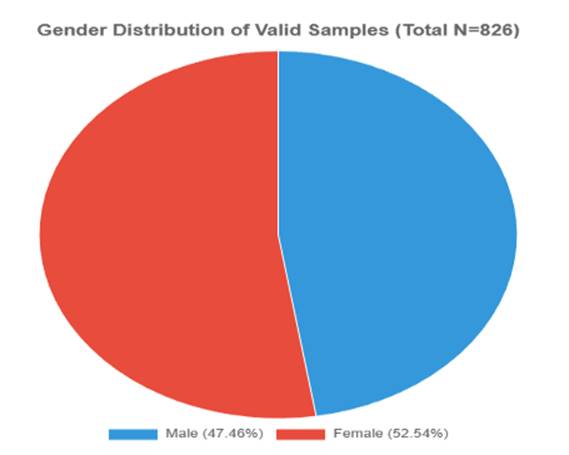
This study adopts the random sampling method, selecting college students from comprehensive universities, science and engineering universities and liberal arts universities in eastern, central and western regions of China as research subjects. A total of 880 questionnaires were distributed, and 826 valid questionnaires were recovered after eliminating invalid questionnaires such as regular answers and missing key information, with an effective recovery rate of 93.86%. The sample covers freshmen to seniors, involving majors of literature, science, engineering, management and art, which ensures the diversity and representativeness of the research sample. The basic demographic information of the sample is shown in Table 1.
3.2.1 Online Learning Environment Scale
The online learning environment scale compiled by domestic mature researchers is adopted, which includes four dimensions: technical environment, resource environment, teaching interaction environment and learning atmosphere environment, with 20 items in total. The Likert 5-point scoring method is adopted, with 1 representing “completely inconsistent” and 5 representing “completely consistent”. The higher the total score, the better the quality of the students’ perceived online learning environment. In this study, the Cronbach’s α coefficient of the scale is 0.892, indicating good reliability and validity.
3.2.2 Learning Engagement Scale
The college students’ online learning engagement scale is used, including three dimensions: behavioral engagement, cognitive engagement and emotional engagement, with 18 items in total. The 5-point Likert scoring method is adopted, and the higher the score, the higher the students’ online learning engagement. In this study, the Cronbach’s α coefficient of the scale is 0.885, which has good internal consistency reliability.
The cognitive load scale adapted to online learning scenarios is adopted, including three dimensions: intrinsic cognitive load, extrinsic cognitive load and germane cognitive load, with 15 items in total. The 5-point scoring method is adopted, and the higher the score, the higher the students’ cognitive load level in online learning. The Cronbach’s α coefficient of the scale in this study is 0.871, with reliable measurement effect.
3.2.4 Learning Motivation Scale
The online learning motivation scale is adopted, including two dimensions: intrinsic motivation and extrinsic motivation, with 16 items in total. The 5-point Likert scoring method is used, and the higher the score, the stronger the students’ online learning motivation. The Cronbach’s α coefficient of the scale in this study is 0.880, which meets the research measurement requirements.
In this study, SPSS 26.0 statistical software and PROCESS macro program are used for data processing and empirical analysis. The specific analysis steps include: first, carrying out descriptive statistical analysis and common method deviation test on all variables; second, conducting correlation analysis among online learning environment, cognitive load, learning motivation and learning engagement; finally, adopting the chained mediating effect test model to verify the dual mediating mechanism of cognitive load and learning motivation, and testing all research hypotheses.
3.4 Common Method Deviation Test
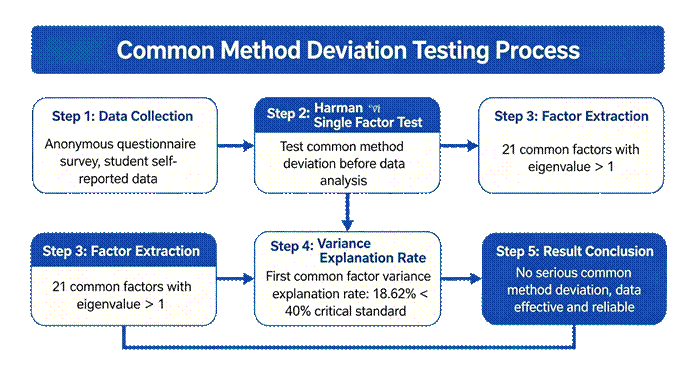
This study adopts the anonymous questionnaire survey method, and all data are self-reported by students, which may have common method deviation. In order to ensure the accuracy of the research results, Harman single factor test is used to test the common method deviation before data analysis. The results show that there are 21 common factors with eigenvalue greater than 1 in all questionnaire items, and the variance explanation rate of the first common factor is 18.62%, which is far less than the critical standard of 40%. It indicates that there is no serious common method deviation in the data of this study, and the research data is effective and reliable.
4. Empirical Results and Analysis
4.1 Descriptive Statistical Analysis of Core Variables
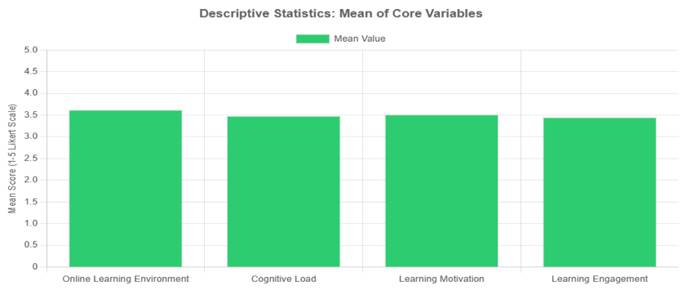
Descriptive statistical analysis is carried out on the mean value, standard deviation, maximum value, minimum value and skewness of the four core variables of online learning environment, cognitive load, learning motivation and learning engagement, so as to understand the overall distribution characteristics of each variable. The specific statistical results are shown in Table 2. It can be seen from the data in the table that the mean value of college students’ online learning environment perception is 3.62, indicating that students’ overall evaluation of the current online learning environment is medium to high; the mean value of cognitive load is 3.48, showing that students have a moderate cognitive load level in online learning; the mean value of learning motivation is 3.51, and the mean value of learning engagement is 3.45, indicating that college students’ online learning motivation and learning engagement are at the medium level, with obvious room for improvement. The skewness and kurtosis values of each variable are within the normal range, which proves that the data of each variable conforms to the normal distribution and is suitable for subsequent correlation analysis and mediating effect test.
4.2 Correlation Analysis of Core Variables
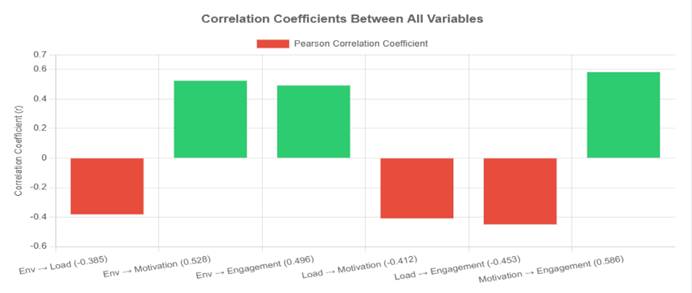
In order to verify the correlation between variables, Pearson correlation analysis is carried out on online learning environment, cognitive load, learning motivation and learning engagement. The results are shown in Table 3. The data show that the online learning environment is significantly positively correlated with learning motivation and learning engagement (r=0.528, p<0.001; r=0.496, p<0.001), and significantly negatively correlated with cognitive load (r=-0.385, p<0.001); cognitive load is significantly negatively correlated with learning motivation and learning engagement (r=-0.412, p<0.001; r=-0.453, p<0.001); learning motivation is significantly positively correlated with learning engagement (r=0.586, p<0.001). The correlation results are consistent with the theoretical hypothesis direction, which lays a good foundation for the subsequent mediating effect test.
4.3 Direct Effect Test of Online Learning Environment on Learning Engagement
Taking demographic variables as control variables and online learning environment as independent variable and learning engagement as dependent variable, hierarchical regression analysis is carried out. The regression results show that the online learning environment has a significant positive predictive effect on learning engagement (β=0.423, p<0.001), and the adjusted R² of the model is 0.215, indicating that the online learning environment can explain 21.5% of the variation of learning engagement. Hypothesis 1 is verified, that is, the better the quality of online learning environment perceived by college students, the higher their online learning engagement.
4.4 Dual Mediating Effect Test of Cognitive Load and Learning Motivation
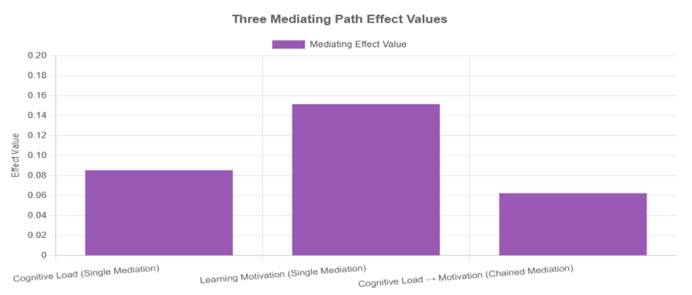
In this study, Model 6 of PROCESS macro program is used to test the chained dual mediating effect of cognitive load and learning motivation. The bootstrap sampling times are set to 5000, and the 95% confidence interval is adopted. If the confidence interval does not contain 0, the mediating effect is significant. The test results show that there are three significant mediating paths in the influence of online learning environment on learning engagement: first, the single mediating path of cognitive load (effect value=0.086, 95%CI=[0.052,0.128]); second, the single mediating path of learning motivation (effect value=0.152, 95%CI=[0.106,0.203]); third, the chained mediating path of cognitive load-learning motivation (effect value=0.063, 95%CI=[0.031,0.098]).
Specifically, the online learning environment can negatively predict cognitive load (β=-0.385, p<0.001), cognitive load can negatively predict learning motivation (β=-0.412, p<0.001), and learning motivation can positively predict learning engagement (β=0.586, p<0.001). It is confirmed that the online learning environment can not only directly affect learning engagement, but also indirectly affect learning engagement through three paths: independent mediation of cognitive load, independent mediation of learning motivation, and chained mediation of cognitive load and learning motivation. Hypothesis 2, Hypothesis 3 and Hypothesis 4 are all verified.
| Variable Category | Classification Index | Sample Number | Proportion (%) |
| Gender | Male | 392 | 47.46 |
| Female | 434 | 52.54 | |
| Grade | Freshman | 226 | 27.36 |
| Sophomore | 248 | 30.02 | |
| Junior | 215 | 26.03 | |
| Senior | 137 | 16.59 | |
| University Type | Comprehensive University | 328 | 39.71 |
| Science and Engineering University | 296 | 35.84 | |
| Liberal Arts University | 202 | 24.46 | |
| Major Category | Science and Engineering | 412 | 49.88 |
| Literature and Management | 305 | 36.92 | |
| Art and Others | 109 | 13.20 |
| Variable | Mean | Std. Deviation | Minimum | Maximum | Skewness | Kurtosis |
| Online Learning Environment | 3.62 | 0.58 | 1.00 | 5.00 | -0.42 | 0.35 |
| Cognitive Load | 3.48 | 0.61 | 1.00 | 5.00 | 0.38 | 0.29 |
| Learning Motivation | 3.51 | 0.59 | 1.00 | 5.00 | -0.35 | 0.31 |
| Learning Engagement | 3.45 | 0.63 | 1.00 | 5.00 | -0.39 | 0.27 |
| Variable | 1 | 2 | 3 | 4 |
| 1. Online Learning Environment | 1 | |||
| 2. Cognitive Load | -0.385*** | 1 | ||
| 3. Learning Motivation | 0.528*** | -0.412*** | 1 | |
| 4. Learning Engagement | 0.496*** | -0.453*** | 0.586*** | 1 |
5. Discussion of Research Results
5.1 Direct Influence of Online Learning Environment on Learning Engagement
The research results confirm that the online learning environment has a significant positive direct effect on college students’ learning engagement, which is consistent with the mainstream research conclusions in the academic field. The online learning environment is the core external scenario of students’ online learning activities. The perfect technical environment can ensure the smooth progress of online learning and avoid learning interruption caused by system failures; the rich and hierarchical resource environment can meet students’ personalized learning needs and expand their learning vision; the positive teacher-student and peer interaction environment can activate the learning atmosphere and enhance students’ learning participation sense. All these environmental advantages can effectively promote students’ behavioral, cognitive and emotional investment in online learning. On the contrary, the defective online learning environment will increase students’ learning resistance, reduce learning experience, and lead to the decline of learning engagement. This result fully proves the importance of optimizing online learning environment for improving college students’ online learning quality.
5.2 Independent Mediating Mechanism of Cognitive Load
Cognitive load plays a significant partial mediating role between online learning environment and learning engagement, indicating that the online learning environment can affect learning engagement by regulating students’ cognitive load level. A high-quality online learning environment can optimize the presentation mode of learning resources, sort out the logical structure of knowledge, reduce external cognitive interference, and maintain students’ moderate cognitive load. Moderate cognitive load enables students to concentrate their cognitive resources on knowledge understanding and internalization, carry out deep learning processing, and thus improve cognitive and behavioral learning engagement. While the chaotic online learning environment has problems such as scattered resources, complicated operation and redundant information, which will consume a large number of students’ cognitive resources, lead to cognitive overload. Excessive cognitive load will make students feel learning fatigue, unable to carry out continuous deep thinking, and finally reduce learning investment. This conclusion verifies the applicability of cognitive load theory in online learning scenarios, and shows that cognitive state regulation is an important internal path to improve online learning engagement.
5.3 Independent Mediating Mechanism of Learning Motivation
Learning motivation also exerts a significant partial mediating effect between online learning environment and learning engagement, which reveals that learning motivation is the core internal driving force connecting environmental factors and learning behaviors. A high-quality online learning environment can provide good learning experience for students, enhance their sense of control and achievement in the learning process, and effectively stimulate their intrinsic learning motivation. Students with strong intrinsic learning motivation can take the initiative to arrange learning time, participate in interactive discussions, and maintain high learning engagement even without strong external supervision. In contrast, the poor online learning environment will bring bad learning experience, reduce students’ learning interest and self-efficacy, weaken their learning motivation, and make students fall into passive learning state, resulting in low learning engagement. This result further enriches the application of self-determination theory in online education, and confirms that optimizing environmental perception and stimulating internal motivation are key measures to improve online learning effect.
5.4 Chained Dual Mediating Mechanism of Cognitive Load and Learning Motivation
This study innovatively verifies the chained dual mediating mechanism of cognitive load and learning motivation. The online learning environment can sequentially affect cognitive load and learning motivation, and finally act on learning engagement. Specifically, the optimized online learning environment firstly reduces students’ unnecessary cognitive consumption, maintains moderate cognitive load, avoids cognitive fatigue, and then enhances students’ learning confidence and interest, stimulates sustainable intrinsic learning motivation, and ultimately promotes the improvement of learning engagement. This chained path reflects the logical law of “external environment – cognitive state – motivational state – learning behavior”. External environmental factors firstly regulate students’ cognitive processing state, and then affect their psychological driving force, and finally produce stable learning behavioral results[14]. This conclusion clarifies the sequential action mechanism of cognitive and motivational psychological factors in online learning, breaks through the limitation of single psychological mechanism research, and supplements the theoretical research on the internal mechanism of online learning engagement.
6. Research Conclusions and Educational Enlightenment
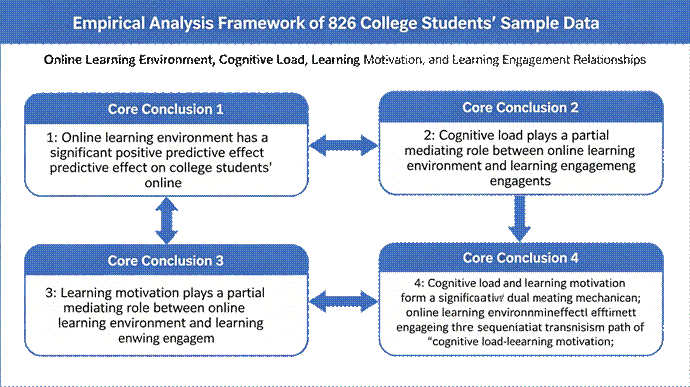
Based on the empirical analysis of 826 college students’ sample data, this study draws the following core conclusions: First, the online learning environment has a significant positive predictive effect on college students’ online learning engagement, and optimizing the online learning environment is the basic premise of improving students’ learning engagement. Second, cognitive load plays a partial mediating role between online learning environment and learning engagement, and good online learning environment can reduce cognitive overload and promote learning engagement. Third, learning motivation plays a partial mediating role between online learning environment and learning engagement, and high-quality online learning environment can stimulate learning motivation and enhance learning engagement. Fourth, cognitive load and learning motivation form a significant chained dual mediating mechanism, and the online learning environment can indirectly affect learning engagement through the sequential transmission path of “cognitive load – learning motivation”.
6.2 Practical Educational Enlightenment
6.2.1 Optimize Online Learning Environment to Build High-quality Learning Scenarios
Colleges and universities should comprehensively optimize the online learning environment from the aspects of technology, resources, teaching and atmosphere. In terms of technical support, it is necessary to upgrade online teaching platforms, optimize system operation functions, reduce system crashes and stuttering problems, and provide stable technical guarantee for online learning. In terms of resource construction, teachers should sort out learning resources hierarchically, simplify redundant content, design modular and serialized teaching resources, and avoid information overload. In terms of teaching interaction, strengthen teacher-student interaction and peer interactive discussion, set up diversified interactive links such as online Q&A, group discussions and homework comments, and activate the online learning atmosphere. In terms of learning atmosphere, colleges and universities should formulate standardized online learning management norms to create a rigorous and positive online learning environment.
6.2.2 Regulate Students’ Cognitive Load to Maintain Moderate Learning Cognition
Teachers should reasonably control students’ cognitive load level in online teaching design. On the one hand, according to the cognitive characteristics of college students and the complexity of teaching knowledge, reasonably arrange learning tasks and teaching progress, avoid excessive learning tasks and complicated knowledge points leading to cognitive overload. On the other hand, optimize the presentation form of knowledge, use pictures, videos and other diversified forms to simplify abstract knowledge, reduce students’ external cognitive consumption, and increase effective germane cognitive load. At the same time, set up reasonable learning guidance and task hints to help students clarify learning ideas, reduce cognitive confusion, and maintain a moderate and efficient cognitive state in the learning process.
6.2.3 Stimulate Internal Learning Motivation to Form Sustainable Learning Driving Force
Colleges and teachers should focus on stimulating students’ intrinsic learning motivation and improving their active learning awareness. Teachers can design personalized and exploratory online learning tasks, combine professional knowledge with practical application, enhance the fun and practicality of learning, and stimulate students’ learning interest. At the same time, improve the online learning evaluation mechanism, adopt diversified evaluation methods combining process evaluation and result evaluation, fully affirm students’ learning progress and efforts, enhance students’ learning sense of accomplishment and self-efficacy, and transform external learning requirements into internal learning motivation. In addition, strengthen learning goal guidance, help students establish clear online learning goals, and maintain sustainable learning motivation and learning engagement.
Colleges and universities should build an integrated training system combining environmental optimization, cognitive regulation and motivation stimulation. On the basis of optimizing the online learning environment, carry out targeted learning guidance training, teach students online learning methods and cognitive regulation skills, help students reasonably allocate cognitive resources and avoid cognitive fatigue[15]. At the same time, carry out learning motivation counseling, guide students to establish correct learning values, stimulate their internal learning demand, and form a benign learning cycle of “good environment – moderate cognition – strong motivation – high engagement”. Through the collaborative effect of multiple factors, the overall quality of college students’ online learning is comprehensively improved.
7. Research Limitations and Future Prospects
Although this study has systematically explored the dual mediating mechanism of online learning environment on college students’ learning engagement, there are still some limitations. First, this study adopts a cross-sectional survey design, which can only reflect the static correlation and mediating effect of variables at a single time point, and cannot reveal the dynamic change law and causal relationship of variables in the long-term online learning process. Second, this study only focuses on the dual mediating effect of cognitive load and learning motivation, and does not consider the regulating effect of demographic variables and other psychological variables, and the research model needs to be further expanded. Third, the research data is obtained through students’ self-report questionnaires, which is inevitably affected by subjective perception, and the objectivity of the data can be further improved.
On the basis of this study, future research can be expanded from three aspects. First, adopt longitudinal tracking research design, conduct long-term follow-up investigation on college students’ online learning state, and explore the dynamic evolution mechanism of online learning environment, cognitive load, learning motivation and learning engagement. Second, introduce regulating variables such as learning self-efficacy and learning adaptability, build a more complex moderated mediating model, and further reveal the boundary conditions of the influence mechanism. Third, adopt a combination of questionnaire survey, behavioral data monitoring and interview research, integrate objective learning behavior data and subjective psychological perception data, and further improve the accuracy and depth of the research conclusions. In addition, future research can carry out comparative research on students of different grades, majors and educational backgrounds to explore the heterogeneity of the influence mechanism, so as to provide more refined targeted suggestions for online teaching optimization.
Reference
[1]Shang X ,Tang A . An examination of the psychological mechanisms underlying the social existence and cognitive investment of college students in an online learning environment[J].Frontiers in Psychology,2026,17 1792669-1792669.
[2]Amoah B ,Kwablah E ,Angmor E , et al. COVID-19 pandemic: unveiling the cost burden of online learning among university students in a developing country[J].SN Social Sciences,2026,6 (4):135-135.
[3]Bringula P R . Logistic regression model of the perceived academic performance of college students in an online learning setting[J].Discover Education,2026,5 (1):299-299.
[4]Sha J ,Mao Y ,Zhang Y , et al. Iterative design of non-disposable assignments for metacognitive development in online-learning[J].Distance Education,2026,47 (1):113-135.
[5]Pham K C . A phenomenographic study of lecturers’ perspectives on undergraduate silence in face-to-face and online EFL learning[J].Cogent Education,2025.
[6]Deng Z ,Jiang C ,Chi S . Family vs. Teacher–Student Relationships and Online Learning Outcomes Among Chinese University Students: Evidence from the Pandemic Period[J].Education Sciences,2025,15 (12):1682-1682.
[7]Kubat A ,Syrnyk C . The Impact of Emotional Prosody on Online Learning in Undergraduates[J].Applied Cognitive Psychology,2025,39 (6):e70152-e70152.
[8]Mawaddah S ,Upsher J R ,Cotier A F , et al. The Relationship Between Digital Competencies and Mental Health in Online Learning: A Systematic Review of Neurotypical and Neurodivergent Higher Education Students[J].Technology, Knowledge and Learning,2025, (prepublish):1-32.
[9]Zhong H ,Xu J . The effect of fragmented learning ability on college students’ online learning satisfaction: exploring the mediating role of affective, behavioral, and cognitive engagement[J].Interactive Learning Environments,2025,33 (10):5805-5819.
[10]Zhu Y ,Lin X ,Kim J , et al. Exploring Human Interaction in Online Self-Regulated Learning Through Danmaku Comments[J].International Journal of Human–Computer Interaction,2025,41 (22):13964-13977.
[11]Catalin I M ,Sorin C . Balancing the Digital Load: Exploring the Role of ICT Services and Technostress Inhibitors in Student Satisfaction With E-Learning[J].Journal of Organizational and End User Computing (JOEUC),2025,37 (1):1-34.
[12]Liu Y . A Study on the Relationship Between Online Learning Strategies and Learning Motivation Among College Students in the Internet Era[J].Education Insights,2025,2 (10):275-284.
[13]Hou C ,Kuhlmann L S ,Greene A J , et al. Process mining measures students’ help-seeking transitions when completing assignments in an online learning and assessment platform[J].Metacognition and Learning,2025,20 (1):40-40.
[14]Pan F ,Zhu G . How digital support and digital competence influence digital resilience of college students in an online learning environment[J].Frontiers in Psychiatry,2025,16 1689767-1689767.
[15]Dhanasree K ,Bhavani K . Exploring Digital Competencies and Online Learning Readiness among Undergraduate Students[J].Advances in Research,2025,26 (5):538-550.
[16] Dr . Dahmane Ahmed , Dr. Djoudi Mohamed Ali, Dr. Bahaz Louiza, Dr. lakdari Hadjer , Dr. Hayat Aichaoui ,The Effect of Tour Program Design on Customer Attraction in Travel and Tourism Agencies in Djelfa Province, Algeria in MAPAN-JOURNAL , Publisher: METROLOGY SOC INDIA , NPL PREMISES, Address: DR K S KRISHNAN MARG, NEW DELHI, INDIA, ISSN / eISSN:0970-3950 / 0974-9853 Volume 25-Issue 1-(2025)